
Political opinion with Jess Brown-Fuller MP: Our planning system is broken
Our planning system is broken. This is not the first time I have said this, and it will not be the last. Communities are frustrated, business growth is stalled, and local councils are drowning in red tape that prevents them from making decisions that benefit everyone.
Last week in Parliament, during a Westminster Hall debate, I called on the Minister for Housing and Planning to make water companies statutory consultees in the planning process. Although they are consulted during the creation of a local plan, they are not consulted on individual developments, meaning concerns about capacity are not considered until after the development is approved. Capacity itself is based on the flow rate during a dry spell, meaning that it can also change annually depending on whether the year has been wetter than usual. Perceived capacity at a wastewater treatment plant can therefore disappear. But this information is not considered when a developer submits an individual application.
It is reasonable for Chichester residents to want infrastructure to be in place before housing construction begins, whether that be water infrastructure, road improvements or additional GP appointments at the local surgery. For this to happen all key stakeholders must be involved in the planning process to avoid applications being dominated by developers and ensure it represents the best interests of communities.
We do not have to look far to see instances where developments have not followed a community led planning process. The Madgwick Park development in Westhampnett, for example, included provisions for football pitches and a clubhouse as part of the S106 agreement. In principle, this was a sensible and much-needed addition to the local area; in practice, two waterlogged pitches remain unusable for months at a time because they were built on a floodplain and the clubhouse was designed in such a way that it cannot serve a dual purpose as a community space. As a result, residents are now burdened with ever-increasing service charges for a community asset they neither want nor can use.
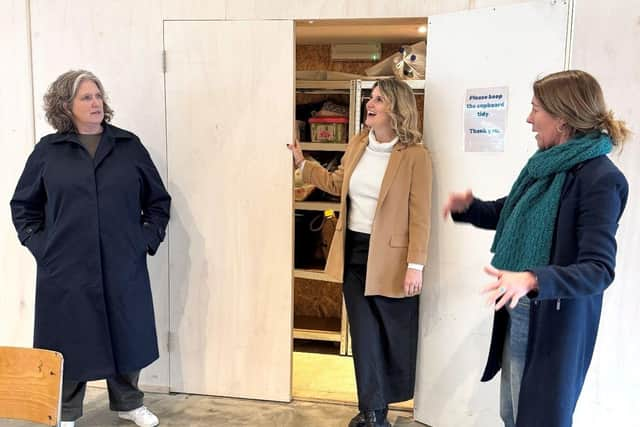

Last week, I also had the pleasure of visiting Chichester Community Development Trust, a charity dedicated to fostering sustainable community development in Chichester. Initially focused on the new Graylingwell Park development, the Trust has since expanded its reach citywide, managing community buildings and delivering diverse programmes and events from its assets. Its CEO, Clare de Bathe, now travels the country advising councils on what a truly democratic, resilient and successful community trust model looks like. This means not only ensuring that planning applications include all stakeholders but also provide the resources a community needs beyond the application, such as a youth hub, a nursery, or a wellness centre.
There are excellent examples of when the system works, and others when it does not. I am simply asking the government to design a planning system that works for communities like ours.