
West Sussex village develops new environment strategy and commits to nature recovery

While world leaders gather at the UN Climate Change Conference, councillors in a West Sussex village are reflecting on what more they can do for the environment and nature.
Lancing Parish Council is developing an Environment & Nature Strategy, setting out how it will play its part in restoring the natural world on its doorstep.
England is one of the world's most nature-depleted countries, retaining only 47 per cent of its original biodiversity. Locally, the chalk grassland at Lancing Ring has declined by 80 per cent since the Second World War and the offshore kelp forests along the Sussex coast have lost around 96 per cent of their historic coverage.
However, the parish council sits at the heart of some of the most ambitious nature recovery in the south east and it is already taking action. Adur District Council has identified five nature recovery corridors and three of them, the Sussex Bay coastal corridor, the Adur Valley corridor and the Weald to Waves corridor, run directly through or alongside the village. The new strategy commits the parish council to being an active partner in that work.
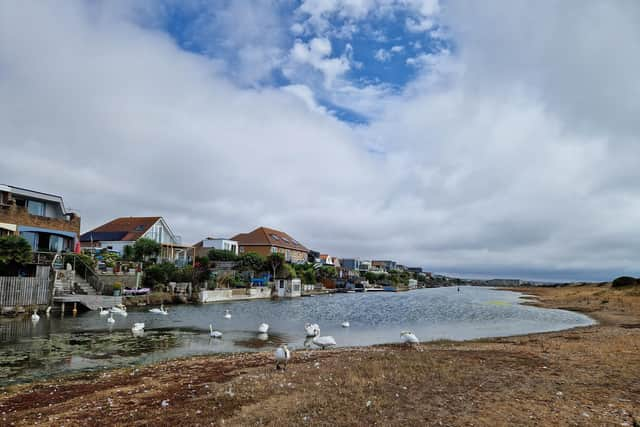

Denyse Whillier, chair of Lancing Parish Council, said: "Lancing sits at a remarkable intersection of habitats – chalk grassland, coastal lagoon, beach, river valley and green spaces right through the heart of the village.
“This strategy is our commitment to looking after that inheritance properly, to increasing the biodiversity of everything we manage, and to building a community that loves and cares for the natural world on its doorstep.
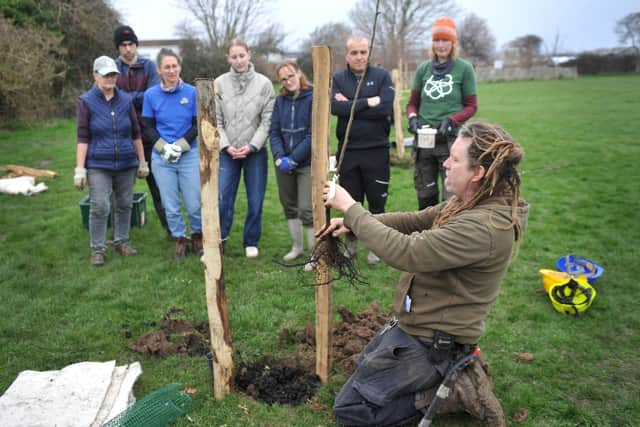
“The work is already under way, with Widewater lagoon restored, tree planting at Lancing Ring and Gold in RHS South East in Bloom for the second year running. That's what stewardship looks like in practice."
The Environment & Nature Strategy strategy commits the council to auditing and improving all the natural environments in its care, increasing biodiversity across everything it manages, developing a year-round community programme, and working in partnership with local environmental organisations, statutory bodies and community groups.
Earlier this year, the council worked with East Worthing and Shoreham MP Tom Rutland and the Environment Agency to restore Widewater Lagoon, one of England's rarest natural habitats and home to specialist wildlife found almost nowhere else.
The treasured wildlife site depends on carefully-balanced water levels to thrive and the mitigation pipe plays a crucial role. The Environment Agency worked to refurbish it from January to March, replacing the supporting timber frame for the seaward section.
This summer, Lancing took part in the RHS South East in Bloom competition and in September, the village was presented with a second consecutive Gold award, recognising the quality of its green spaces and the community effort that keeps them that way.
The council is also looking to work with local community groups on a programme of improvements, covering Widewater Lagoon, Lancing Ring and Orient Road Recreation Ground. Tree planting and a community orchard and garden are under way.
Steve Trice, clerk and chief executive of Lancing Parish Council, said: "We manage some remarkable spaces – Widewater Lagoon, Beach Green, Orient Road and green areas right across the village. This strategy is about being serious stewards of those places: understanding what we have, improving it year on year, and actively working to increase biodiversity wherever we can.
“The goal isn't just to maintain them. It's to pass them on richer and more alive than we found them."
Around 120 people attended a screening of The People’s Emergency Briefing in August. The 50-minute film presented scientific evidence on the climate and nature crisis on what was one of the hottest days of the year.
Building on this interest, the council launched a Climate & Nature film programme to coincide with COP31. On November 10, there was another screening of the briefing and on Tuesday, November 17, How to Live on Earth, narrated by Benedict Cumberbatch, will explore what nature recovery at scale could look like.