
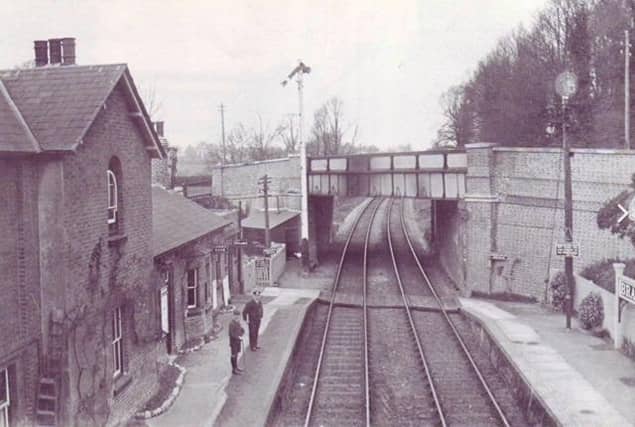

Some beautiful looking stations have been rep-purposed as shops or homes, some are abandoned and derelict and the sites of others remain only as a patch of countryside where you would never know that a station existed. In some cases whole lines, such as Three Bridges to Tunbridge Wells and the Adur Valley line have disappeared.
Britain’s railways came as a result of the industrial revolution and helped to create the wealth of the country. The first steam railway locomotive which was introduced by Richard Trevithick in 1804.
During the 1960’s, the increasing number of motor cars saw people looking toward the roads rather than the railway. A landmark report by then head of British Rail, Richard Beeching, led to the closure of many stations and whole branch lines in the 60s. Many architectural treasures, and the memories they contained, have been lost forever.
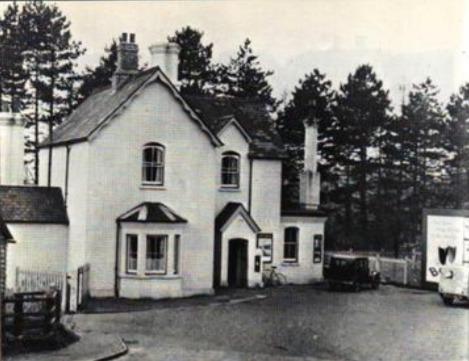
17. Rudgwick railway station
Rudgwick station opened in November 1865. It was on the Cranleigh Line. It served the village of Rudgwick until June, 1965. the station was demolished leaving the trackbed and bridge in situ. In the 1980s the trackbed was made part of the Downs Link, a footpath linking the North Downs and South Downs National Trails. A few years ago the local authority installed a viewing platform near the "bridge over a bridge" to allow the public to inspect this unusual structure more closely. Rudgwick Medical Centre has been built on the site of the station's main building. Photo: supplied
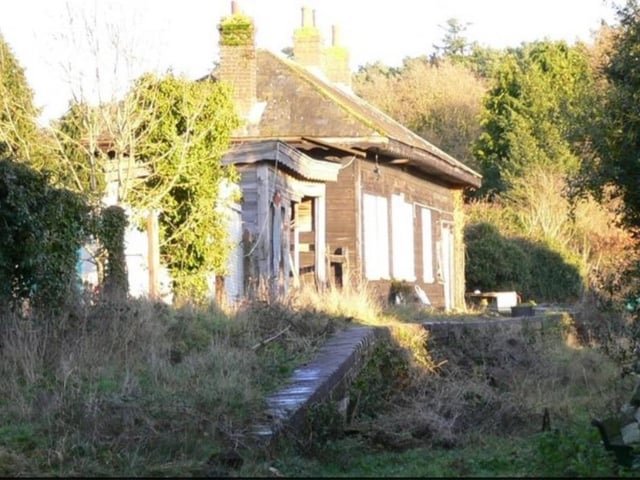
18. Selham railway station
Selham railway station was out in mostly open fields, although a public house was located nearby. The station was on the Pulborough to Midhurst line which was originally part of the London Brighton and South Coast Railway. The station opened after the line (which opened in 1866) on 1 July 1872. The station was closed to passenger services in 1955. The station building is now a private home Photo: supplied
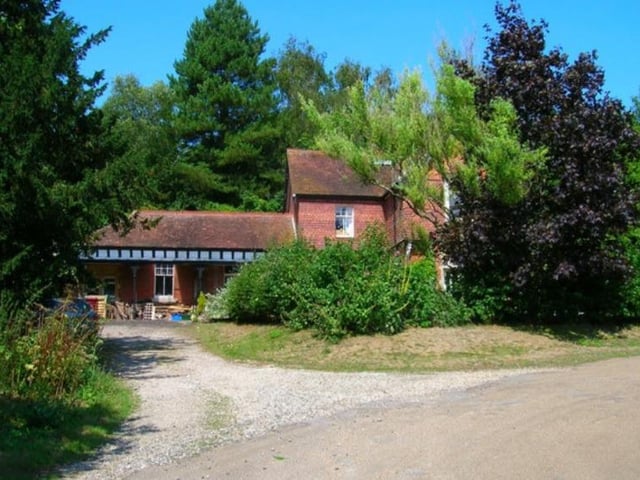
19. Singleton railway station
Singleton railway station was on the former line between Chichester and Midhurst. It was opened on 11 July 1881. It was one of the most visited stations by the royal train as the Prince of Wales (later Edward VII) used to 'weekend' with the James family at West Dean House. The station closed to passengers in 1935 and to freight in 1953. The station was later in use by a vineyard owner, but is now a private residence. In March 2019, the former station was listed Grade II by Historic England Photo: supplied
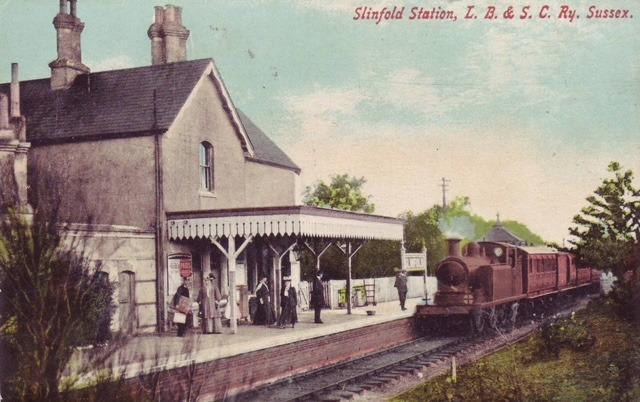
20. Slinfold railway station
Slinfold railway station was on the Cranleigh Line. The line had a single track and opened on 2 October 1865. The line was closed in 1965. Slinfold station was demolished and a caravan park now stands on the site. Photo: supplied