
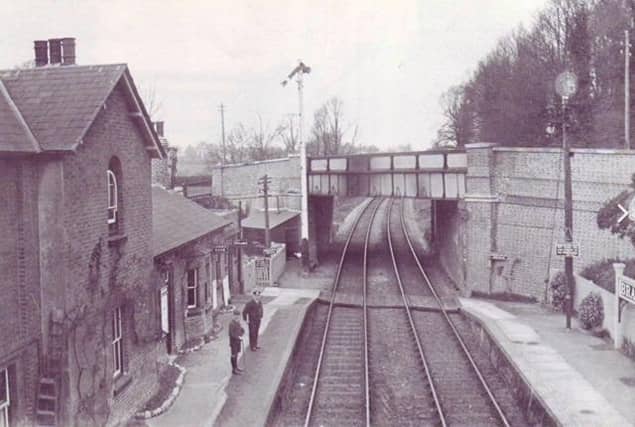

Some beautiful looking stations have been rep-purposed as shops or homes, some are abandoned and derelict and the sites of others remain only as a patch of countryside where you would never know that a station existed. In some cases whole lines, such as Three Bridges to Tunbridge Wells and the Adur Valley line have disappeared.
Britain’s railways came as a result of the industrial revolution and helped to create the wealth of the country. The first steam railway locomotive which was introduced by Richard Trevithick in 1804.
During the 1960’s, the increasing number of motor cars saw people looking toward the roads rather than the railway. A landmark report by then head of British Rail, Richard Beeching, led to the closure of many stations and whole branch lines in the 60s. Many architectural treasures, and the memories they contained, have been lost forever.
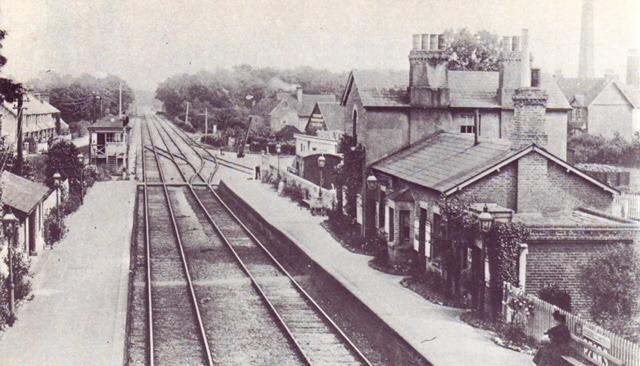
21. Southwater railway station
Southwater was a railway station on the Steyning Line and opened in 1861.The station closed as a result of the Beeching axe in 1966. The station demolished and the site covered with housing development. The local parish council have erected a replica station sign in the vicinity. Photo: supplied
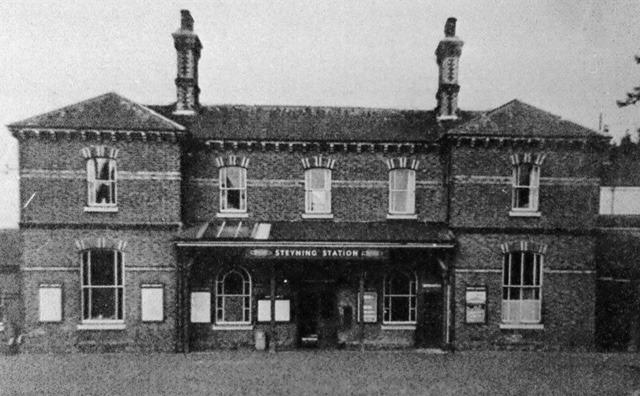
22. Steyning railway station
The station opened in 1861 and closed in 1966. In addition to passengers, the station's main traffic was animals, notably horses, for the Wednesday cattle market in "Market Field". The site is now occupied by the new alignment of the A283 Steyning-by-pass. Only the old warehouse building long since converted into townhouses remains of the station today aside from the name "Station Road" Photo: supplied
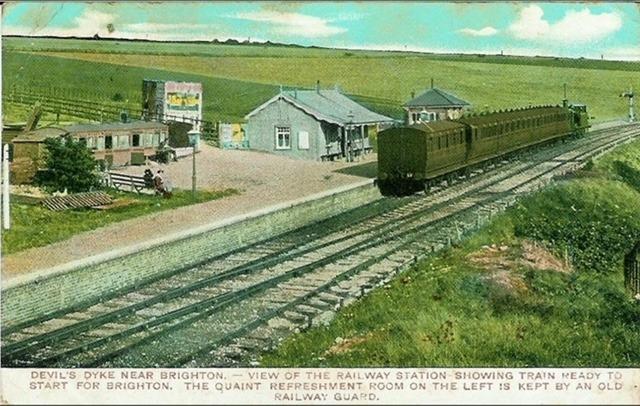
23. The Dyke railway station
The Dyke was a railway station near Devil's Dyke which opened in 1887 and closed in 1939. The line was opened by the Brighton and Dyke Railway Company to serve what was at the time a very popular tourist destination, boasting two bandstands, an observatory, a camera obscura and fairground rides. The station itself was equipped with basic facilities to accommodate tourists and postcards of the station buildings reveal a converted railway carriage with shack attached bearing the sign "Tea and Cakes". The 1893 August Bank Holiday saw around 30,000 people flock to the Dyke, many of them brought by the railway. The station was demolished after closure and the site is occupied by a farm. Part of the trackbed of the line remained unused until 1988 when the "Dyke Railway Trail" was created Photo: supplied
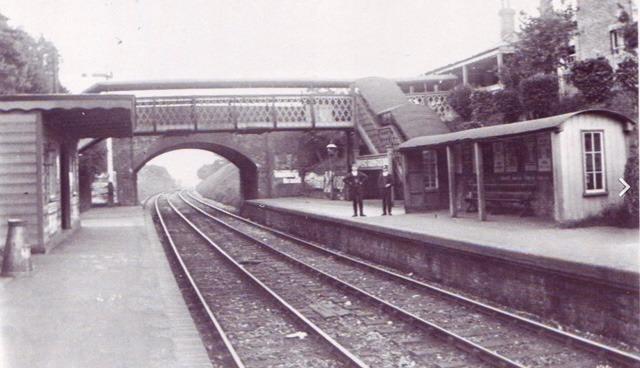
24. West Grinstead railway station
West Grinstead was a railway station on the Steyning Line which opened in 1861. The station closed in 1966 and now forms part of the Downs Link footpath. The main station building and station worker's cottages, although now privately owned, remain, as do the station platforms. The local parish council have erected a replica station sign in the vicinity, and an old railway signal has also been installed. A British Railways Mark 1 coach has also been placed on rails in the former goods yard. Photo: supplied