
'Regrettable damage' to memorial bench at Worthing beauty spot as travellers evicted; new group sets up elsewhere

A memorial bench has been damaged, and large amounts of rubbish left behind, after an unauthorised camp was set up at Highdown Recreation Ground in Worthing.
It comes as a separate unauthorised encampment has been established at Goring Gap, where West Sussex County Council (WSCC) confirmed 11 caravans were on site. Notice has been ‘served to vacate’ the land and court proceedings will ‘follow in due course’.
The council said the same action was taken before caravans, finally, moved on from Highdown Recreation Ground on Sunday (July 5). However, authorities have not said whether those at Goring Gap are the same group that had been staying at Highdown.
The Highdown encampment had consisted of nine caravans and one motorhome, according to WSCC. Notice to leave the site was first served in late June, although additional vehicles were later seen at the location before it was eventually vacated.

Following the group's departure, Worthing Borough Council has confirmed its cleansing team has been clearing waste from the recreation ground, while a specialist contractor has been brought in to remove asbestos left at the site.
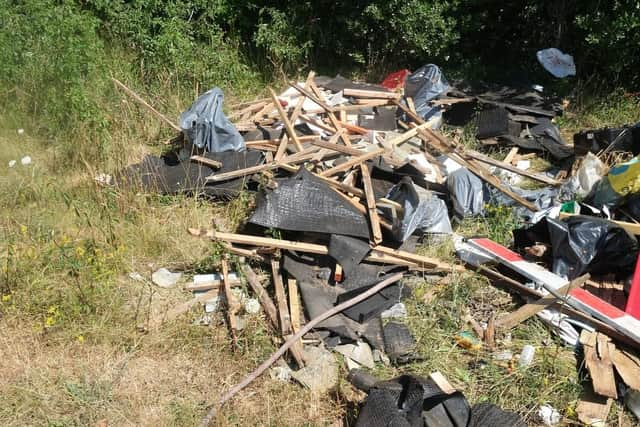
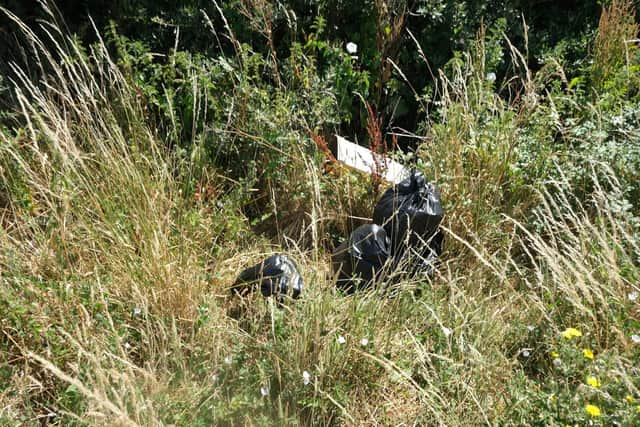
Former ward councillor Russ Cochran shared photographs on Facebook, showing what he described as extensive fly-tipping.
He wrote: "Just been up to the now vacated Highdown. Let's just say it really isn't that pretty for a national park beauty spot at present. I have recorded around 85 images and there are about 50 fly tips.”
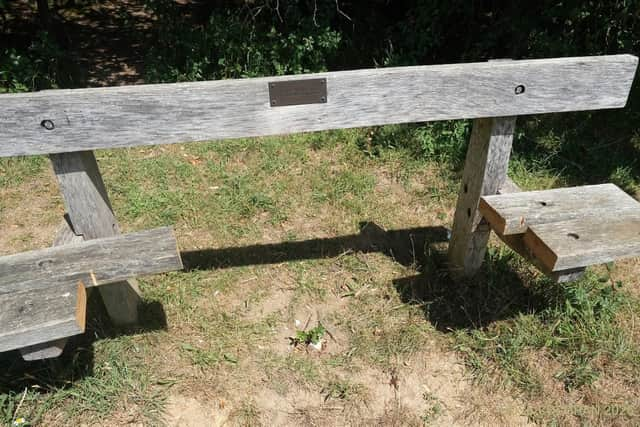
Alongside a photo of a damaged memorial bench, he added: “I have to report that our visitors have chopped it up and used it to burn."
Worthing Borough Council said it had worked alongside WSCC and Sussex Police while the encampment was at Highdown.
A spokesperson said: "Members of the travelling community have been located at Highdown Recreation Ground recently and we, alongside lead authority West Sussex County Council and Sussex Police, have been regularly visiting the site to check issues and any impact felt by residents, local businesses and visitors.
"We provided extra bins while the group was there to mitigate the impact of waste left at the site. Since the group left the site our cleansing team has been clearing waste and a specialist contractor will be removing asbestos waste left at the site.
"We are also aware of the regrettable damage to a memorial bench and will be repairing this as soon as possible.
"With our partners, we will continue to review our approach and to consider any possible prevention measures as part of our overall programme in Worthing. However, any such measures would need to be developed with our partners and take into account the council's priorities for investment, and health and safety considerations."
The council added that information about its approach to working with travelling communities and managing unauthorised encampments is available on its website.
Meanwhile, legal action is continuing in relation to the unauthorised encampment at Goring Gap, with WSCC confirming that court proceedings will follow if the site is not vacated.
What does the law say?
In June 2022, it was made an offence for someone over 18 to reside on land without the owner’s consent and have, or intend to have, at least one vehicle with them.
The powers have made police able to arrest people and seize equipment, including vehicles, in relation to the offence.
Chief Constable Jo Shiner said traveller encampments can be a ‘challenge’ for local authorities and the police force.
At a performance and accountability meeting with police and crime commissioner Katy Bourne, Ms Shiner said Sussex Police were one of the first forces to use the new powers.
What happens after you make a report
Members of the travelling communities, including gypsies and travellers, periodically visit West Sussex. Adur and Worthing Council said this happens ‘most commonly in the summer’ and for ‘short periods at a time’.
A spokesperson added: “Adur & Worthing Councils welcome all communities to visit and enjoy our local area, and we also work together with partners to make sure visits by travelling communities work for everyone.”
West Sussex County Council (WSCC) is the lead authority for managing such visits but local councils provide access to bins; and – ‘where appropriate’ – toilets on the sites; deal with reports of fly-tipping and ensure sites are cleaned up after groups have moved on ‘repair any damage caused to the sites afterwards’.
A WSCC spokesperson said: “Once we receive a report we will visit a site to check: its tidiness; how much it's disrupting local residents and businesses; whether it's obstructing highways or public rights of way; if there are any welfare or humanitarian issues.
"We will tolerate an encampment for a short time if the campers are behaving, the site is tidy and other circumstances allow.
"We are likely to evict if the camp is causing a nuisance or campers aren't behaving. Usually we agree an acceptable deadline with the campers. This is cheaper and quicker than taking legal action.
“If we can't agree an eviction deadline there are powers the police can use. We have to apply these in line with the Human Rights Act and Race Relations Act, otherwise we may be challenged in court.”
Sussex Police responds to ‘any reports of anti-social behaviour or crime’ involving either the travelling communities or the settled community – the site where they are staying and the area nearby, the county council said.
Police officers also liaise with the Gypsy and Traveller Advisory Group to ‘promote equality and tackle hate crime’.
To report incidents of anti-social behaviour or crime, including hate crime: call 101 or make a report on the Sussex Police website. However if you believe someone is in immediate danger, call 999.