
South Downs National Park brings beautiful bird back from the brink
It’s an iconic bird symbolising love at Christmas and has inspired countless writers and musicians, from Shakespeare to Annie Lennox.
But the long-adored turtle dove is on the brink of extinction in the UK and urgent efforts are now under way in the South Downs National Park to help the species recover.
In late spring, 30 doves were released in an undisclosed location in the park.
The doves, which are Europe’s only migratory dove species, are already making themselves at home, laying eggs and flying around the area.
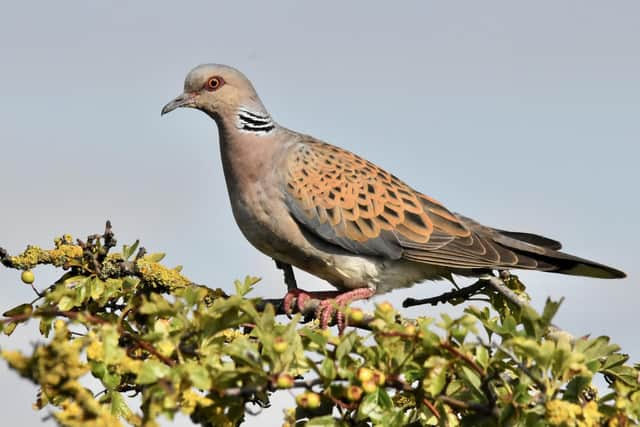

This autumn the dainty birds are expected to fly 3,000 miles to their overwintering grounds in sub-Saharan Africa as they negotiate a journey across France, Spain and Morocco.
It’s hoped the turtle doves will return next year as landowners, farmers, National Park Rangers and other partners have created suitable conditions for the birds to flourish, including new ponds, managed hedgerows and scrubby areas for nesting and feeding.
In the meantime, plans are afoot for another turtle dove release next year. Around 100 birds are being cared for in an enclosure under the watchful eye of the landowner and a dedicated team of volunteers, ready for release in spring 2027.
The inspiring project is a partnership between the landowner, the Selborne Landscape Partnership – which is a group of farmers and landowners working together to improve the local landscape and wildlife – together with the National Park Authority and the Farming and Wildlife Advisory Group (FWAG) for the south east.
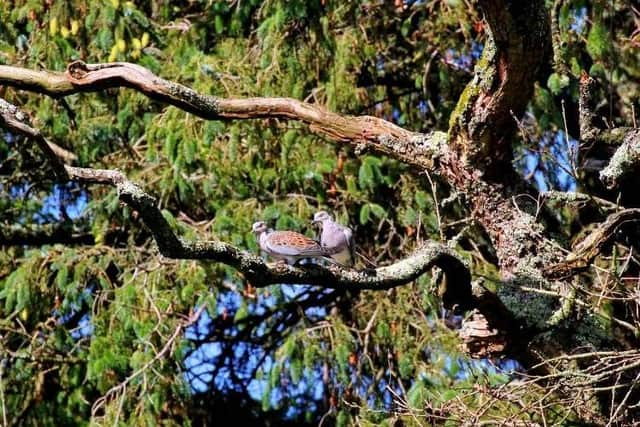
Paul Bushell, a Ranger for the South Downs National Park, explained: “We all know the turtle dove from the festive carol, but the truth is they are now far too rare for such a Christmas gift.
“This stunning, colourful bird would once have been fairly common across the South Downs landscape. However, they are now one of the fastest-declining bird species in Europe due to habitat loss, predation and hunting, with numbers plummeting by 98 per cent in the UK between their peak in the late 1960s and 2023.
“There are still small numbers of turtle doves living in the National Park and we hope that careful releases like this can help create a new and much-needed South Downs stronghold for this red-listed bird.
“The South Downs National Park is particularly suitable for this farmland species, which loves woodland edges, arable, scrubby, hedgerow habitat with ponds nearby.
“This has been a real team effort between partners, volunteers and local communities and we’d like to thank everyone who has been involved.”
To help the turtle doves settle in, “weedy” wildflowers that turtle doves love to eat have been planted, including fumitory, birds foot trefoil, vetch, red and white clover. Turtle doves need accessible, shallow freshwater for drinking and bathing near to nesting sites, so seven ponds were restored last winter with a further 14 being restored this coming autumn.
Paul added: “The turtle doves that have been released seem really happy. We’re monitoring their whereabouts with the help of the wider community, who are sending in sightings that we plot on a map. We will be anticipating that this may increase when the turtle doves return next spring on their flight from migration.
“Interestingly, one of the females has come back into the enclosure to lay some eggs, which is incredibly encouraging.
“They really are a spectacularly beautiful bird and the males produce the most enchanting churring sound during the breeding season. It is such an incredible and moving experience to see and hear the birds back in the landscape where they belong.”
Robert Anderson-Brown, Trustee of the Turtle Dove Trust, said: “Our mission is to help the drastically reduced UK population to recover with carefully reared captive bred birds.
“The Turtle Dove Trust have been working in partnership with the SDNPA, Selborne Landscape Partnership, FWAG SE amongst several other landowners and organisations to help support this innovative project and to help save this wonderful bird from potential extinction in the UK.”