
Worthing church installs high-rise homes as part of a campaign to help save swifts

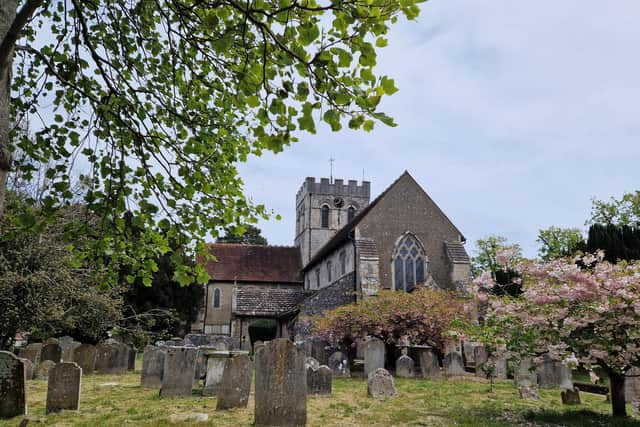
Broadwater Parish Church has moved into the property market – in a very specialised way, with the installation of high-rise homes for swifts.
Worthing and Adur Swift Group is working to help save these critically-threatened aerial birds by placing custom-made nest boxes in carefully-selected locations.
The landmark tower at St Mary's Church in Broadwater was one site selected and keen bird watcher Rob Ferguson has designed and built an 18-cavity swift nest box, like a block of flats for birds, for the project.
Rob said: “I have been involved in Broadwater Church for many years and been up and down the tower dozens of times. As a lifelong birdwatcher, I realised it was a suitable place for swift boxes.
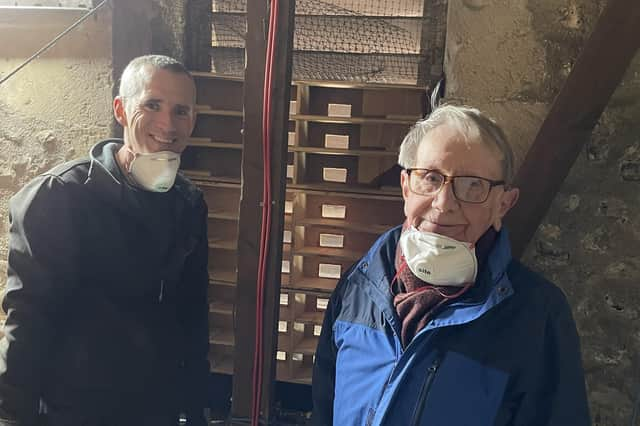

“Some of us formed a group, took advice from the Sussex Ornithological Society about the design, and then got permission from the Archdeacon to go ahead.”
The swift group, which is active in Worthing, Lancing and Shoreham, was set up by the society 18 months ago to survey nesting swifts and campaign to boost their population, as these birds are under threat across the UK.
The boxes designed for the church are hidden behind the louvres in the tower, so the group did not require formal approval.
Jackie Burdon, another swift group member, said: “Swifts are social birds which nest in colonies, so it’s hoped this high-density provision will be their ideal 'des res'. Nor will they be troubled by the regular church bells or the 10m drop. In fact, swifts have lived happily in and around churches for centuries.
“All that’s left is for the church group to install a special 'swift caller', which plays the sound of swifts, and wait patiently for young birds to show interest.
“With its scythe-shaped wings, dizzying flight speed and distinctive 'squee!' calls, the well-loved swift was a common summer sight and sound above our towns only a generation ago. Sadly, numbers have plummeted by 70 per cent in the UK in the past 30 years.
“Modern building techniques are one reason for the decline. Not many people realise that swifts are primarily urban birds which rely on small cavities in our roofs for their nest sites. Each pair chooses one site for life and if their entry point is blocked up, for example by roof renovations or insulation, they will not breed again. They enter the nests infrequently and do not cause mess, so homeowners may never even realise they are there.”
Volunteers conducting the group's first survey last year identified just 18 active swift nest sites in several colonies across Worthing and only two in Shoreham.
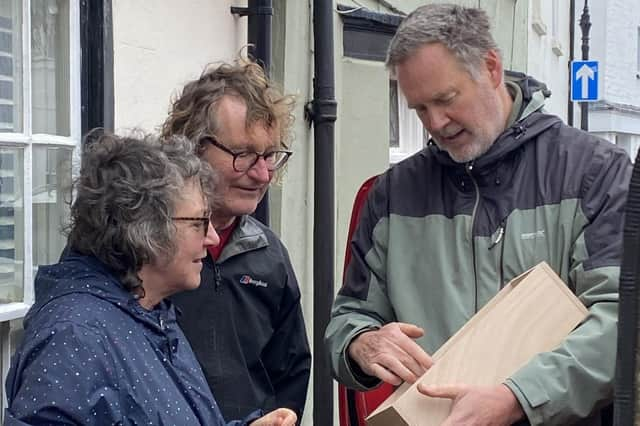
This year, the group has been recruiting homeowners living near these precious remnants to fit swift boxes and callers. As well as the church installation, about 80 new swift boxes are being fitted across Worthing to offer homes to young swift pairs and help boost numbers in years ahead.
Member Steve Lawless said: “It would be tragic if swifts were lost to our towns and countryside. It’s very heartening that so many people are willing to try to help save them for generations to come.”
The common swift is the UK’s only swift species of about 100 worldwide. It is the fastest UK bird in level flight, reaching speeds up to almost 70mph, and lives almost entirely on the wing – eating, sleeping and sometimes mating in flight. It lands only to nest and cannot even stand or perch on its short legs.