
East Sussex Reform councillor for Peacehaven requests to be replaced on SEND transport panel after comments spark controversy

The Leader of East Sussex County Council says a Reform councillor has asked to be replaced on an appeals panel for SEND transport decisions.
Leader Andy Woolley confirmed that county councillor Tracy Pedro (Peacehaven division) requested to be taken off the panel following a Green councillor’s call for an investigation into her after comments she made in an online interview.
But councillor Woolley said her decision ‘should not be portrayed as an admission of wrongdoing’.
Lewes District Green Party told this newspaper that Green county councillor Johnny Denis (Ringmer and Lewes Bridge) had written to ESCC’s monitoring officer after councillor Pedro ‘appeared to question whether parents were looking for taxis to take their children to school because they could not be bothered to use public transport’.
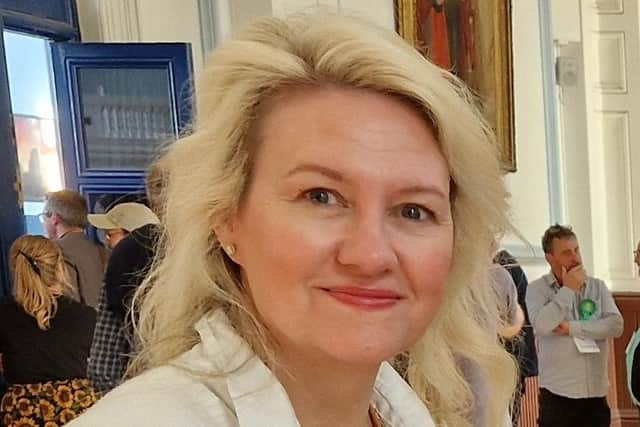

The Reform councillor had been interviewed by Jess Caine for Caine’s Cabinet on YouTube. The full interview is at www.youtube.com/@ukliveonline.
During the discussion, Jess Caine asked councillor Pedro: “So are you saying that some people with ADHD are applying and appealing through your panel to potentially get a taxi to school because they can’t really be bothered to get on the bus?”
Councillor Pedro responded: “Yes, I mean yes, that’s...I’m afraid that is bang on.”
Councillor Denis highlighted this interaction in his letter, and then highlighted a moment where councillor Pedro asked: “Why are these parents still pushing this? If the council has said no to this that should be the end of it.”
In his letter, councillor Denis said: “This statement appears fundamentally at odds with the purpose of an independent appeals process. Parents have a legitimate right to challenge transport decisions. The role of an appeals panel is to consider each case fairly, objectively and in accordance with the relevant statutory framework, not to presume that an initial officer refusal should be determinative.”
His letter added: “I recognise that a public statement does not, in itself, establish that any individual appeal was improperly determined.”
But councillor Denis called councillor Pedro’s statements ‘shocking’, saying they raised ‘serious questions about her ability to approach these decisions impartially’. He said parents of children with special needs and disabilities ‘just want their kids to be able to get to school safely’.
Councillor Pedro responded to the complaint by saying: “I am disappointed that comments made during a much wider interview have been presented in a way that I believe gives an incomplete picture of both the discussion and my experience of serving on the Discretionary Transport Appeals Panel.
“The discussion concerned discretionary school transport, the considerable work undertaken by Council Officers in assessing applications and the difficult decisions that Councillors are subsequently asked to make when cases are appealed. I have always recognised that there are families facing genuinely difficult circumstances, and that there are exceptional cases where transport support is necessary. I acknowledged this during the interview.”
During the conversation with Jess Caine, councillor Pedro talked about reviewing people requesting free school transport for their children. She said: “It can be a difficult situation because a lot of people know that they can get free transport for their children up to a certain age.”
After that, she said parents might have to take their own children to school or use public transport. She said there was a ‘growing issue’ where neurodivergent children might not be accepted for free transport through the ‘officer route’, adding that officers have a ‘very stringent process’ when looking at these cases. She said appeals then go to councillors who have to make ‘very difficult decisions’.
Councillor Pedro also said appeals often come in with psychological, consultant and specialist reports that can take hours to read. She then said in the interview: “It can be exhausting trying to find an outcome, because on one hand you have an overprivileged society who’s requesting these things when parents maybe clearly are able to financially afford their own taxi services. Or alternatively they just don’t care that the taxpayers are paying that money and they still want it.”
Councillor Pedro told this newspaper she believes it is ‘entirely reasonable’ to question how discretionary public funding is allocated, as well as the ways decisions are reached and whether alternatives have been properly considered.
She said: “These are responsibilities that come with being an elected representative and having a duty to taxpayers as well as residents who use a service. I have worked alongside Councillors from the Green and Liberal Democrat groups on the appeals panel. We have approached the cases before us together, considered the evidence and reached unanimous decisions.”
She said she was not aware of any decision during her time on the panel that had been improperly determined.
Councillor Pedro added: “I do not accept that expressing views about public expenditure or the operation of discretionary services automatically means a councillor is incapable of considering individual cases fairly.”
She also said she had received ‘personal hostility and harassment’ during the controversy, which had ‘taken their toll’. She said: “I have therefore requested to be replaced on the panel. This is a personal decision and should not be interpreted as an admission that I have acted improperly. I remain committed to ensuring that public money is spent responsibly and that families with genuine needs receive proper consideration and support.”
Councillor Woolley called the transport appeals process ‘an important safeguard’ where every appeal ‘must be considered fairly, carefully and on its individual merits’.
He said: “The Council has confirmed that the established procedures have been followed and that decisions have been unanimous. Comments made in a wider political interview should be considered in their proper context. Equally, it is important to distinguish between views expressed about the allocation of public money and the separate question of whether an individual appeal has been considered fairly. One does not, in itself, establish the other.”
Councillor Woolley said: “Tracy has asked to be replaced on the panel. I respect her decision, but it should not be portrayed as an admission of wrongdoing.”
He said: “Families dealing with SEND-related transport needs deserve to be treated with understanding and respect. At the same time, the Council has a responsibility to ensure that public money is allocated properly. Those responsibilities are not in conflict: the purpose of the appeals process is to ensure that individual circumstances receive proper consideration within the framework of the council’s policies. Our focus remains on the fair operation of that process and the support available to children and their families.”