
West Sussex shipping containers: MP addresses concerns that taxpayers could foot the bill for major clean up; pets should be kept away from washed up avocadoes

An MP has addressed concerns that taxpayers could foot the bill for a major clean-up operation across West Sussex, after shipping containers washed up on local beaches.
Sixteen shipping containers washed up on the West Sussex shoreline, from the ship Baltic Klipper, on Saturday (December 6).
Arun District Council, Chichester District Council and West Sussex County Council are leading the clean-up – supported by an environmental management company Ambipar. A significant response has also been mobilised by the community thanks to several local residents and litter picker groups.
Donna Johnson, a Green and Independent Alliance councillor for the Selsey division, said on Thursday that it will take ‘around a fortnight’ to, ‘hopefully, restore the beach to state it was’.

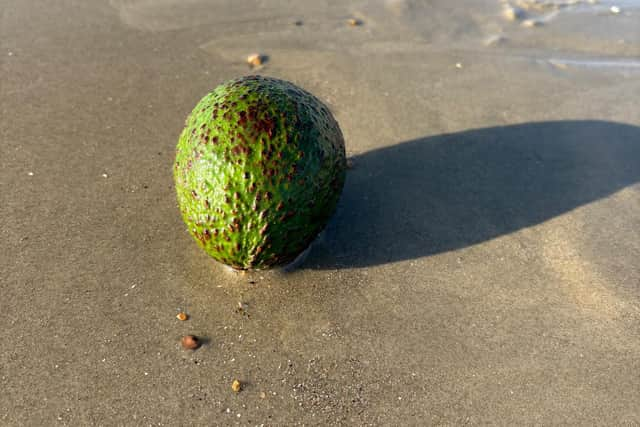
Alison Griffiths, MP for Bognor Regis and Littlehampton, provided an update on Thursday (December 11). This comes after avocadoes washed up on the beach at Felpham.
She said: “Further to my last update, I wanted to provide details about the clean-up along our stretch of coastline.
“The teams on the ground have now moved past the initial ‘make safe’ phase and are getting on with the slower, detailed work. Ambipar has brought in more staff and they’re going through the affected areas carefully, looking not just at what’s visible on the beach but at the wider environmental impact. Some specialist kit is also being brought in to help deal with the smaller bits of debris that have spread further than expected.
“You’ll see more council crews and contractors over the next few days. They’re also visiting gardens close to the shoreline where material has blown in, helping residents clear it. A number of local volunteer groups have been out as well, and I’d like to thank everyone involved.”
The MP said the Coastguard is ‘still checking offshore for any remaining containers’.
She added: “They’re using fixed-wing aircraft to sweep the area while the councils and Ambipar focus on the beaches. Securing the containers already on land is also ongoing so that none of them end up back out to sea.
“If you’re helping with the clear-up, please take care. Some of the debris is sharp, and certain spots may be taped off while the teams work. The advice is to avoid going out alone and to keep clear of the waterline. If you spot anything that hasn’t been collected yet, please let Ambipar know at [email protected]
“The costs of clearing this mess should not fall to residents, who are already doing so much to help. I am firmly pressing this point with the councils involved to ensure that the bill is met by the vessel's operators and their insurers, which I am sure you’ll agree is the right outcome.”
The Felpham Village Conservation Society has been involved in a beach clean-up. Around 30 volunteers came to clear debris from Longbrook to Summerley.
Volunteer Glenn Powell wrote on Facebook: “You will have seen were of amazing community responses in Selsey and Bognor. But be assured Felpham was doing its bit! More people will be out this morning if you want to help. Bring bag, gloves and picker if you have one.”
December’s beach clean in Felpham takes place on Saturday from 10.30am until 12pm.
The society added: “As you’ve heard, there is a lot of debris on our beach at the moment so be prepared!! We will start from the normal place in front of the beach huts, unless it is raining, and then we will start from the benches in front of the sailing club.”
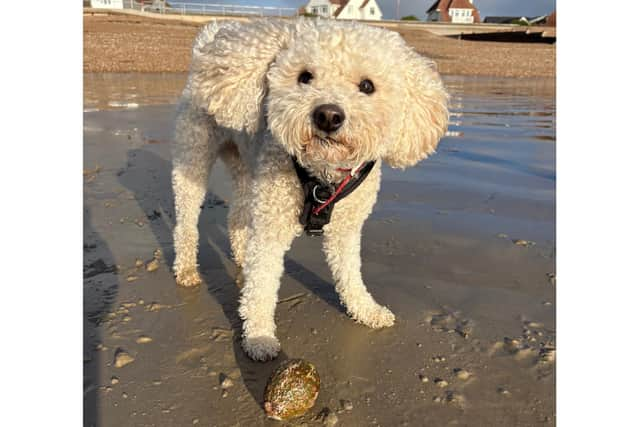
After avocados bad for dogs?
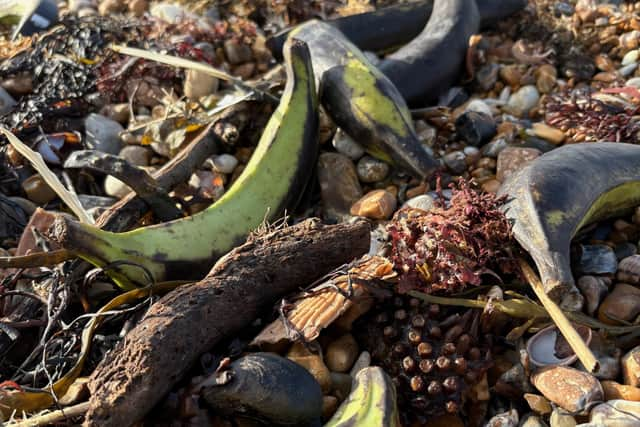
The containers which have washed up were carrying fruit such as bananas and avocados, which were heading for supermarkets.
According to www.petpoisonhelpline.com, avocado contains a toxin called persin, but ‘only certain species of animals’ are impacted.
The website reads: “While dogs and cats are rarely affected by persin, avocado poisoning can be deadly to birds and large animals (such as cows, goats, sheep). The bigger risk to dogs and cats is a foreign body obstruction in the esophagus, stomach, or intestinal tract if part or all of a large avocado seed is swallowed.”
But, according to www.petmd.com, the risk of avocados ‘outweighs the benefits’ for dogs.
“While they’re not inherently toxic, avocados have potential to cause the following issues,” the experts added.
"They may cause pancreatitis. Avocados are high in fat, which can cause pancreatitis, an inflammation of the pancreas, a digestive organ. In some cases, this condition can even be fatal. Some dogs can develop pancreatitis even if they only eat a small amount of avocado pulp.
“The pit can cause an intestinal blockage. The pit of an avocado doesn’t digest well in a dog’s intestinal tract and might cause a gastric or an intestinal blockage. If their system is not able to process the pit, it will become stuck partway through the intestinal tract. If this happens, the only treatment is to surgically remove it—just as if it was a rock, rubber ball, or any other indigestible object.
“They may cause digestive upset. The one known poison in avocados is persin, which is a natural antifungal compound. The levels of persin vary between different types of avocados and other external factors. Ingestion of large amounts of persin might bother a dog’s stomach, but your dog would have to eat a lot of leaves, bark, or avocado peels to experience symptoms.”