
Political opinion with John Milne MP: Why are we waiting longer to receive our pensions?
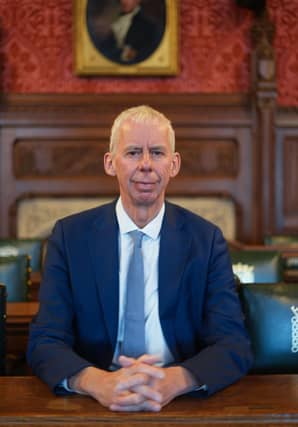

In my role as a member of the Work & Pensions Select Committee, we are currently looking at the issue of pension adequacy and the increasing retirement age. Currently, it’s set at 66 for both men and women, but it will rise to 67 next month for anyone born after April 1960. How ready are we for these changes, and what can we expect in the future?
Let’s start with the good news. Thanks to the ‘triple lock’, brought in by the Liberal Democrats in Coalition with the Conservatives, our pensioners are much better off than they were 30 years ago. The triple lock guarantees that the state pension goes up every year in line with either inflation, wages or 2.5% - whichever is the highest.
This was important because UK pensions were among the worst in Europe, and pensioner poverty was widespread. I don’t for one minute suggest that everything is fixed now, but we’re certainly in a much better position than we used to be. We’re now in roughly the middle of the pack compared to our European neighbours.
So why is the retirement age going up again, and will it continue to rise in the future? There are far more pensioners than there used to be, and we’re living much longer on average. When the male retirement age was first set at 65, just after World War 2, men only lived a couple of years longer on average. Now, of course, we can expect 20 years drawing our pension or even more. The sums have changed drastically.
This is a serious challenge because, contrary to many people’s understanding, pensions are not paid for out of our National Insurance. A state pension today is paid from current taxation, not your own contributions over a lifetime. Quite simply, we have fewer working-age taxpayers supporting more and more pensioners.
Given these pressures, it’s hard to see how we can avoid increasing the retirement age, but we have to make sure that vulnerable groups are being protected. It’s clear that many people in their 60s can’t possibly stay in work indefinitely, especially those in tough manual jobs. The committee is considering whether the government should provide targeted assistance.
With growing pensioner poverty and the Iran war now pushing oil prices higher and higher, it is often older and more rural households that are among the most exposed to shocks and cost-of-living pressures. An issue I’ve been pushing the Chancellor on in recent weeks.
I recognise that pensions are not the most exciting topic for the average person. But there’s a huge amount of thought and innovation going into the system, and unlike in other areas, there’s a genuine will to tackle the long-term challenge.