
Heat network drilling works in Worthing to continue through June

Worthing residents have been given an update on the progress of the heat network project.
Work linked to the Worthing Heat Network in Steyne Gardens is due to be completed by June 25, ahead of Armed Forces Day and the town’s summer events programme.
Worthing Borough Council shared the latest update from the developer, Hemiko, confirming that activity in the gardens will be finished and the ground reinstated before major summer events begin.
The update follows previous works that began on May 18 to reinstate parts of Steyne Gardens – while continuing the rollout of the low-carbon heat network across the town centre, without road closures.
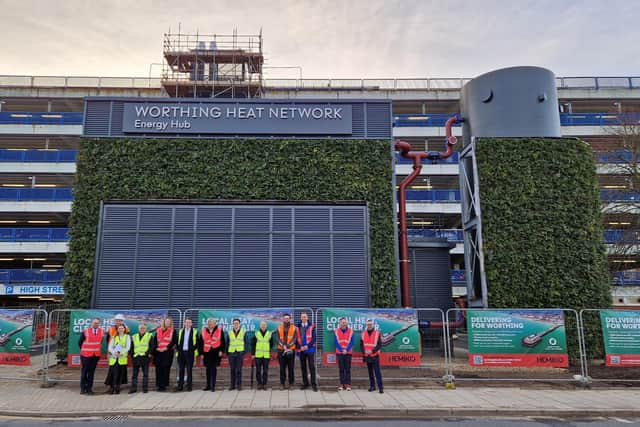

Officially launched in February, the Worthing Heat Network is designed to provide low-carbon heating to key buildings across the town, with the first phase already operational at several landmark sites.
In an earlier social media post, Hemiko thanked residents, businesses and visitors for their patience while plans to connect the network to Splashpoint Leisure Centre and the Pavilion Theatre were finalised following updated ground investigations.
The company said sections of Steyne Gardens would be reinstated to allow the ‘ground to recover and the grass to regrow’, enabling parts of the space to reopen to the public while work continues in a reduced construction area in the northern section of the gardens.
Engineers are also preparing to install underground pipework using drilling techniques beneath Brighton Road and Steyne Gardens, avoiding the need for large trenches across the area.
A spokesperson for Hemiko said: “We appreciate that the community is eager to see Steyne Gardens returned for public use as soon as possible.
“These activities will take place between May 18 and June 25. We are committed to completing works and restoring and vacating the gardens ahead of Armed Forces Day to ensure the town centre’s key events can continue as normal.”
The latest update confirms underground drilling is expected to begin during the week commencing June 8, with smaller fenced-off construction areas remaining in Steyne Gardens and at the High Street Energy Hub.
Hemiko added: “Traffic will continue to flow as usual, no road closures are planned, and the High Street Multi-Storey Car Park will remain open throughout the works.
“Much of the activity will involve underground drilling to minimise disruption at surface level.”
Residents with questions about the project are being encouraged to contact the company directly at [email protected].
After the official launch in February, we asked the developer a series of questions to explain the value of heat networks and how they work.
Who are Hemiko?
The leading heat network utility provider Hemiko is investing in low carbon heat networks, building them and operating them in Westminster, Worthing and Old Oak & Park Royal.
What are heat networks?
This district heating system works by collecting unused heat from the air, or generating heat at scale, then distributing it as hot water to local users via a network of underground pipes for heating and hot water in buildings.
Has it been done before?
Heat networks are common in major towns and cities across northern Europe and Scandinavia, particularly Copenhagen. They use a heat exchanger instead of a boiler, so there is no need for gas.
What's so good about it?
Heat networks are the cheapest, smartest way to provide clean heat to homes and businesses in the UK. They collect local wasted heat from the air, which reduces the need for foreign fuel imports.
Does it affect air quality?
Yes, because they replace old gas boilers, reducing exposure to nitrogen oxides and sulphur dioxide pollution.
Will it save money?
Heat networks are the most cost-effective way to supply heat to buildings. They draw on local sources of heat, using the most appropriate source at any one time to provide heat to the network.
Who is using Worthing Heat Network?
The Connaught Theatre was the first Worthing building to go live on the network, on September 29, 2025, closely followed by the Worthing Town Hall complex, including the Assembly Hall, plus Worthing Museum & Art Gallery and Portland House. Worthing Hospital has been connected to the heat network and will fully switch over shortly.
What happens now?
The next phase of work will see Splashpoint Leisure Centre and the Pavilion Theatre connected to the network.
What about people's homes?
The pioneering district heating project will eventually supply clean, local heat to buildings and homes across the town. The ambition is to offer this greener, cheaper heat to the whole of Worthing by 2050.
What has it all cost and who paid for it?
Worthing Borough Council was awarded more than £7million of grant funding after a successful application to the government's Public Sector Decarbonisation Scheme. This unlocked £40million of investment from Hemiko, which also plans to invest around £500million by 2050 as the network expands.
The council was required to match-fund the grant with a £3.2million investment towards modernising the public buildings, including new windows for the museum and theatre.
The NHS received approximately £19million in funding from the government to connect Worthing Hospital to the heat network.