
Three pelicans join the flock at West Sussex wetland centre
Spring has brought three newcomers to join the flock of pelicans at a West Sussex wetland centre.
Dalmatian pelicans Jean, Wanda and Ghost have joined the existing pelican flock at WWT Arundel Wetland Centre, taking the total to seven at the Pelican Cove exhibit
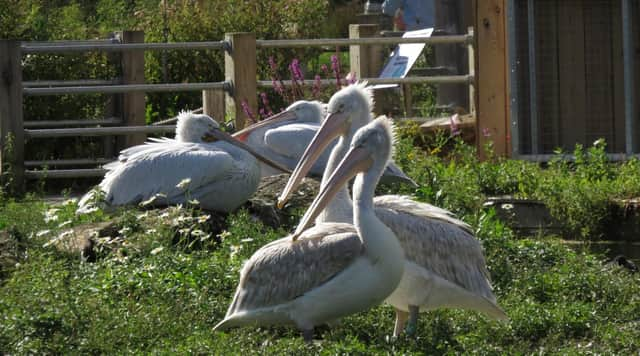

The trio originally travelled to the UK from a zoo in Berlin in February 2025 and, following quarantine, spent six months settling in at WWT Slimbridge Conservation Breeding Unit. Their final stop was WWT Arundel, where they arrived on April 22.
Dalmatian pelicans are famously hard to sex, as males and females share the same snowy‑white feathers. While Jean, aged four, and Wanda, seven, are believed to be female, keeper Molly Foote‑Wyman says Ghost, five, remains a mystery for now.
“We’re currently waiting for feather sexing results for Ghost – they may or may not be male,” she explained.
The birds spent their first week in the Pelican Barn to get used to the sights and sounds of their new surroundings, as well as their new flock mates Rogue, Storm, Logan and Odin.
These names are no accident. At WWT Arundel, pelicans are traditionally named after Marvel superheroes.
The centre said Dalmatian pelicans are the largest and rarest pelican species, with a wingspan of up to 10 feet. Watching them fish is a highlight for visitors, as they use their enormous throat pouches – capable of holding the equivalent of three buckets of water – to scoop up prey.
The birds can be seen enjoying the Pelican Cove exhibit, complete with a large pond and island perches where they preen, sunbathe and socialise. Behind the scenes, the Pelican Barn offers space for health checks, weighing and quiet time away from visitors.
Keepers feed the pelicans several times a day, matching their impressive appetites. Visitors are invited to Meet the Keepers at the daily 2pm talk at Pelican Cove, where staff share insights and answer questions about these show‑stopping birds.
Dalmatian pelicans are long‑lived birds and usually won’t begin breeding until around seven years old, meaning there could be even more excitement in store as the flock matures.
Marc Boardman, head of living collection at WWT, said: “Our ambition is to grow the Pelican Cove flock to around ten birds, which would be the largest resident group of Dalmatian pelicans in the UK.
“A bigger flock is more natural and, as the birds mature, may even lead to breeding activity in the future.”