
Sussex Heritage: English Delftware prized by royalty and Sussex sheep farmers
See the latest news from Your World at https://www.sussexexpress.co.uk/your-world
By the mid-17th century tin glazed Delftware had become prized not only by royalty but by the middle classes and minor gentry. Contemporary records show purchases by Sussex sheep farmers, apothecaries, Lord Sheriffs and lawyers.

Tin glazed earthenware entered Europe through Spain which was under the rule of the Umayyad Muslim caliphate. Tin glazed earthenware arrived in Italy from Spain in the first half of the 13th century. From Italy the method spread throughout Europe. Once fired the pottery emerges from the kiln as a brownish earthenware. It is then dipped in a glaze The design, painted in colours, is then absorbed into the glaze as soon as it is applied. No corrections to the painted design are possible. Many art historians liken the process to that of fresco wall painting, rare Saxon examples of which are to be found in a number of Sussex churches.
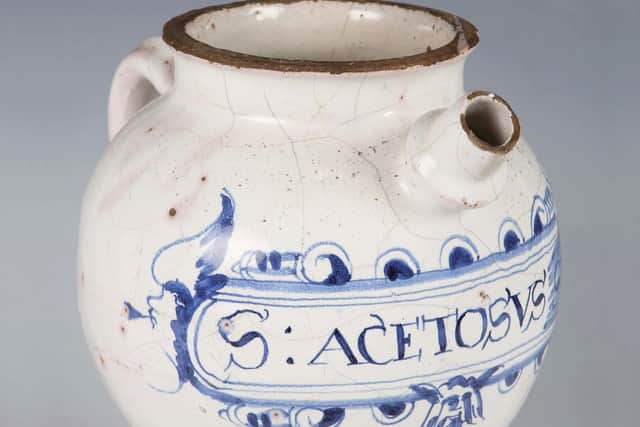
The rare English Delft 'pipe-smoker' wet drug jar dates from around 1665. Its shape is typical of the period with a ridged handle and opposing short spout. Painted in blue the label reads 'S: ACETOSVS SIM' (syrup of vinegar simple). Both ends of the label are ornamented with a head appearing to smoke a pipe, although it is now thought that they actually just have long protruding tongues. The lower middle section of the label is ornamented with a 'green man' mask. In his book 'Delftware: The Tin-Glazed Earthenware of the British Isles', Michael Archer illustrates another drug jar with the same label. This particularly rare example was previously in the collection of Sir Harry Jephcott, 1st Baronet, managing director of Glaxo Laboratories.. It sold at Toovey’s for £7000.
William and Mary (1689-1702) and their courtiers furnished their houses with extravagant Delft urns and pyramids predominately commissioned from Holland. This increased the fashion for Dutch and English Delftware.
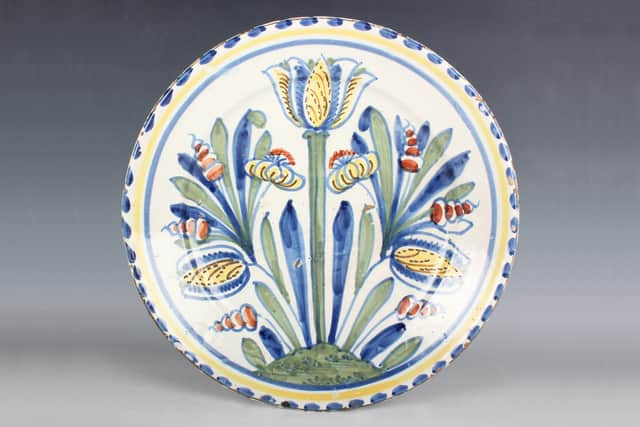
The beautifully decorated English delft Tulip charger with blue dash rim dates from around 1700 and was probably manufactured in London or Bristol. Painted in blue, green, yellow and red with three tulip flowers, carnations, spiral buds and leaves in a fan like arrangement it made £1600 despite the significant crack across the middle of the dish.
The finest examples of delft tin glazed earthenware have a delightful provincial quality. Whilst their decoration often reflects the regions in which they were made they connect the collector with the international stylistic influences of their time. There is a joy to tin glazed delft ware. Perhaps it is time you discovered the delights of collecting tin glazed earthenware!
Rupert Toovey is a senior director of Toovey’s, the leading fine art auction house in West Sussex, based on the A24 at Washington - www.tooveys.com - and a priest in the Church of England Diocese of Chichester.