
Worth Abbey takes next step in long-term commitment to nature and sustainability
See the latest news from Your World at https://www.sussexexpress.co.uk/your-world
Worth Abbey is taking a further step in its long-standing commitment to caring for its land and environment, with a major new habitat restoration project.
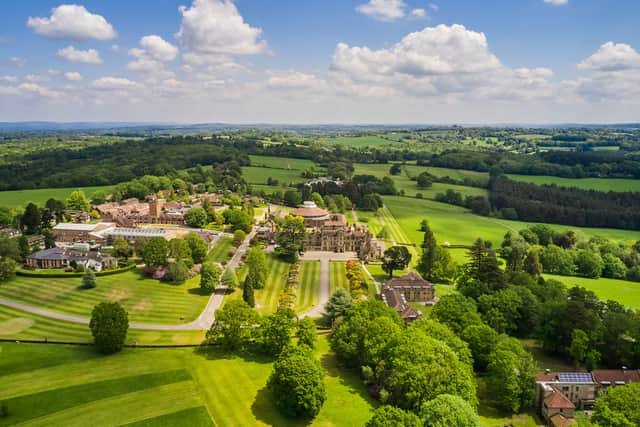

The project, being developed in partnership with Biofarm, will restore and enhance around 25 hectares of land at Worth, near Crawley, Sussex, creating areas of lowland meadow, neutral grassland, mixed scrub and new trees.
It will also provide Biodiversity Net Gain (BNG) units for developers whose projects need to compensate for the loss of nature caused by development, helping to fund the long-term management and restoration of the land.
The project builds on Worth's long-standing approach to stewardship of the estate. The Benedictine community has cared for the land for generations, with the estate also home to Worth School, providing a setting in which pupils can learn, live and engage with the natural environment.
The habitat restoration will form part of the wider Weald to Waves nature recovery corridor, helping to strengthen connections between habitats across Sussex from the High Weald to the coast.
It is just one part of a broader programme of environmental investment at Worth. Earlier this year, work began on an orchard of 50 young apple trees, marking 50 years since the Abbey Church was dedicated for worship in 1975. After soil testing and preparation, grass and wildflower seed has been sown between the rows to support pollinators, with the trees due to be planted this autumn.
At Worth School, an onsite apiary established last year is giving pupils practical experience of sustainability, biology and environmental stewardship, while helping them understand the important role bees play in the wider ecosystem.
Environmental responsibility has also been built into the infrastructure of the estate. Worth Abbey and School has replaced 35 oil-fired boilers with a 1.6MW biomass energy centre and 1.7km heat network serving 24 buildings, cutting carbon emissions by around 940 tonnes of CO2e each year.
Together, the projects reflect an approach to sustainability that goes beyond individual initiatives, linking the management of the estate with education, community engagement and the long-term protection of nature.
Abbot Mark Barrett said: “Caring for this land has been part of life at Worth for generations, and it is important to us that this continues in ways that are practical, meaningful and lasting.
“The habitat restoration project is an important part of that commitment. It will allow us to restore and care for a significant area of the estate while contributing to nature recovery beyond Worth itself.
“Alongside the orchard, our apiary, the work of our pupils and the investment we have made in our energy infrastructure, it is part of a much bigger picture – ensuring that Worth remains a place where people and nature can flourish together.”
Philip Brainin, Co-Founder and CEO at Biofarm, said: “We are delighted to be working with Worth Abbey on this exciting project. The Worth Abbey habitat bank will create and enhance lowland meadow, neutral grassland, mixed scrub and trees, generating 131 BNG units for development across Mid Sussex and the wider South East.
“The restoration will also help reconnect habitats across the wider landscape, with Worth forming part of Weald to Waves, a nature recovery corridor stretching across Sussex.
“But our work goes beyond habitats and biodiversity units. We’re building a long-term relationship with the people who know and care deeply for this environment.”