
Celebrating Enrico Caruso at the Petworth Festival
Enrico Caruso was the first singing superstar, famous all over the globe, his every move reported by the newspapers, his death mourned by millions.
His life and achievements will be explored and celebrated in The Great Caruso which will be brought to the stage by Mark Milhofer (tenor) and Nigel Foster (piano) at this year’s Petworth Festival.
Their performance will be on Wednesday, July 29 at 7.30pm at Champs Hill, Pulborough, with tickets available through the Petworth Festival website.
Mark discovered Caruso through the 1951 biographical film directed by Richard Thorpe starring Mario Lanza, The Great Caruso: “He really came into my life through Mario Lanza. He was an A-lister Hollywood star with the good looks. He had this voice. He had the most amazing powerful beautiful voice you've ever heard. All his films were musicals, and he was a real star.
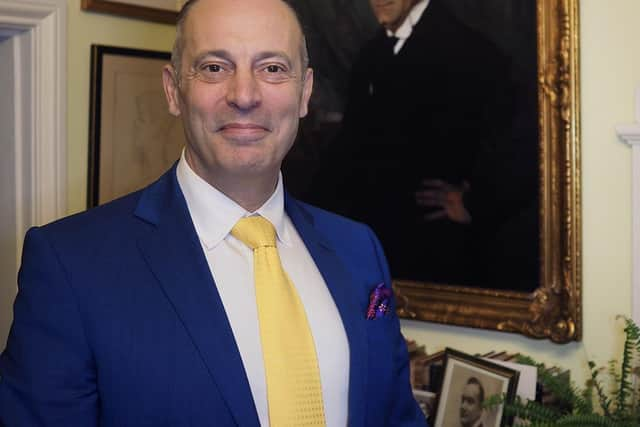

“Caruso's widow had written a kind of biography of Caruso. This was the early 1950s. It was not totally accurate. They made the film Hollywood style, and it was fairly inaccurate as well with Caruso dying on stage which he didn't and also not mentioning his sons by a previous relationship and just turning it all into a good story.
“So I saw this and I just wanted to know who this great Caruso was. Mario Lanza apparently taught himself by listening to Caruso.
“And I just discovered the world's greatest tenor. He had a fabulous voice. He could act. He would support hundreds of Italian immigrants in America. He was a brilliant caricaturist and artist but really he just completely changed the world of opera. He was at the dawn of verismo opera, opera that was truthful. Before that a lot of the stories were a bit silly but then with verismo opera it became about real-life stories. Caruso turned up with a different attitude to singing that people had not heard before. Before it was all about standing still and making a beautiful sound. He came along and started making a sound that got into your soul. He sang from the heart. Rather than trying to make a beautiful sound he sang with all the emotions that he could muster. It was passion, and it was real passion. It was true. It really affected anyone that heard it, and anyone could hear it. He was at the dawn of gramophone records. He made his first record in 1902. It was a very primitive system. He would sing into a great big horn and the vibration would move a needle and that meant that it could be played back.”
In the show Mark uses music which was almost all in the film but adds a couple of extra arias: “And I tell the audience about Caruso and about Mario Lanza and about how they were interconnected and how it has affected me. Caruso dies in 1921 and Mario Lanza was born in 1921 and you see how Lanza absorbed him. There were two other great tenors that were born in 1921 and Caruso's spirit was divided between the three of them.”
In The Great Caruso we are treated to all of the great tenor’s passion and virtuosity, repertoire including Neapolitan songs A Vucchella and O Sole Mio, and classic operatic arias such as E lucevan le stelle (Tosca) and La Donna e Mobile (Rigoletto) with piano accompaniment from Nigel Foster.