
Where to watch the eclipse in Midhurst and Petworth
On Wednesday evening, up to 90% of the sun’s diameter will be eclipsed, making the astronomical event one of the most impressive in decades.
The skies across Midhurst and Petworth will begin to darken from 6.18, before maximum contact at 7.14. At 8.07 the moon will leave the sun, ready for sunset at 8.34.
If spectators look safely across an unobstructed horizon towards the West to the Northwest, they will witness an event that won’t be repeated in southern Britain until 2081.
As our area benefits from some of the darkest skies in the UK, there are a multitude of places to watch the eclipse and local beauty spots are preparing for an influx of sky‑watchers hoping for a clear view of the western horizon.
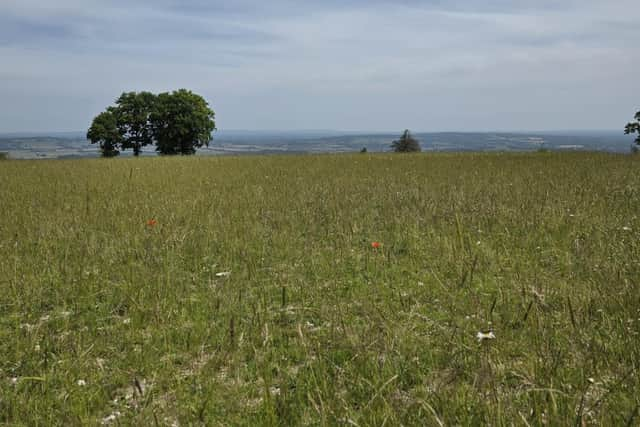

Visit Midhurst recommends three strong vantage points: Iping Common, Heyshott Down and Older Hill, all offering wide, uninterrupted views across.
Iping Common, part of the South Downs National Park, is one of the area’s most open heathland landscapes. Its broad, gently sloping terrain gives long sightlines towards the west, with very little tree cover to obstruct the view. Parking is close by, and the common’s sandy paths make it an easy and accessible choice for families.
Heyshott Down sits high above the village, offering sweeping panoramas across the Downs and towards the western horizon. Parking in the village is limited, though, and the climb up to the Down is very steep. It’s ideal for the more adventurous who will be rewarded with a dramatic, big‑sky backdrop.
Older Hill viewpoint, tucked above the slopes of the Cowdray Estate, provides one of the most striking outlooks in the Midhurst area. There is a small car park accessible from Linch Road. From the top, the landscape opens out in a broad arc, giving clear views across the valley and towards the setting sun.
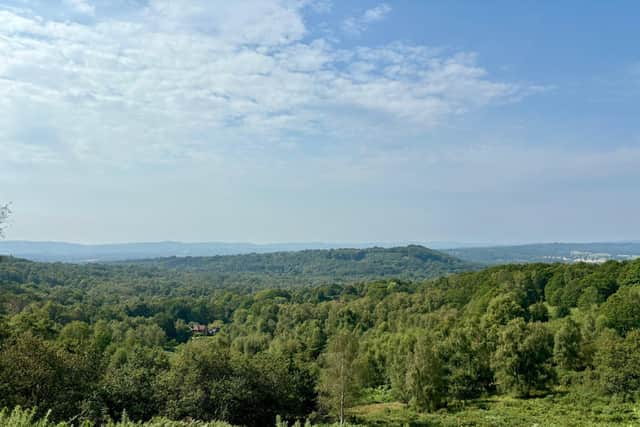
Further south, Bignor Hill is one of the highest and most reliable eclipse‑watching points in the area. Its open chalk summit offers a near‑perfect western and north‑western horizon, free from tree lines and development. The short walk from the car park leads to a panoramic viewpoint that is widely regarded as one of the best in West Sussex for sky‑watching.
Other elevated stretches along the South Downs Way between Bignor and Harting offer similarly expansive horizons, though some require a steeper climb.
Meanwhile, the South Downs National Park has also highlighted events further afield: “There are several astronomy groups who are holding special events, including the Winchester Science Centre, the South Downs Planetarium in Chichester, the Observatory Science Centre at Herstmonceux, Lewes Astronomical Society and Sussex Sidewalk Astronomers. Links to local astronomy groups can be found on the Dark Skies hub.”
Never look directly at the sun without appropriate eye protection. Certified eclipse glasses are essential for safe viewing
The evening continues with the peak of the annual Perseid Meteor Shower. The South Downs National Park said: “It can produce many bright fast meteors with trains, up to 150 per hour at its peak. If 12 August doesn’t work because of the weather, it is worth going out on the days either side, particularly the days before the peak.
They are called “Perseids” because if you track back the trail of the meteor, they will look like they are coming from the constellation Perseus, but the meteors can appear in any area of the sky, so a nice big open view is helpful, and all you need is your eyes and some patience!”
With anticipation building across Midhurst and Petworth, tomorrow’s eclipse promises a rare moment of shared wonder. Just remember to protect your eyes, enjoy the spectacle safely and send in your photographs.