
Fishing sinking in Hastings
A headline in the Sunday Times on 25 May read “’If I could sell, I would, but who’d buy my boat now?’: despair of the last fishermen in Hastings”. Veteran Hastings fisherman Roland Kelly, 62, was describing how the centuries old Hastings fishing industry was collapsing, for many reasons. The worst are the recent Brexit deal giving EU boats access to British waters for the next 12 years, and the complicated and unfair rules and regulations that make life hard for small boats like those at Hastings but let big boats Hoover everything up, so there are now few fish left to catch.
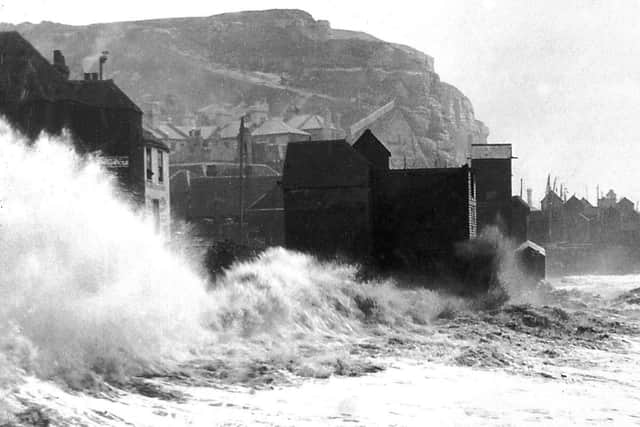
In the last 150 years there have been several attempts by the town’s establishment to force all the boats to leave the Stade and go to Rye, so that the fishing beach could be turned into a venue for profit-generating tourist facilities. The most dramatic scenes came in the early 1880s when Hastings Council decided not build sea defences in front of the Old Town, hoping incoming storms would wash away the fishing boats and their net shops. This came to a climax in 1882 when the sea actually started undermining many buildings on the seafront, forcing the council to back down and build the big groyne at Rock-a-Nore in the late 1880s.
But in the early 1890s the presence of this groyne gave several local businessmen the idea of building a harbour, using the groyne as its eastern arm. A problem was that at the heart of the harbour would be the fishermen’s beach, at least half of which would have to be concreted over and have buildings put on it. The developers said the fishermen would keep the other half of their landing place, and would also have free, or very cheap, use of the harbour’s landing stages. Some well-off boat owners liked the idea, because they could buy much bigger vessels capable of catching many more fish. But many poorer fishermen could sense that the uncertain future could be bad news, with them being forced out of business.
The launcher of the harbour plan was Old Town grocer and Tory councillor Richard Idenden. He and some other Hastings businessmen in early 1896 had made available £200,000 of bonds to pay for the construction of a 24 acre two-armed harbour, with landing stages, wharves, railways and offices. But fund-raising advertisements had the deceptive heading 'Borough of Hastings', giving the impression that Hastings Council was running the scheme, which it was not. There was also widespread local opposition to the plan because there would not generate enough trade, it would cause problems for the fishing industry and it would almost certainly silt up.

Nevertheless, work began on 1st June 1896. But in following months it emerged that only £81,000 had been raised via the bonds, so on 16 June 1897 a ‘foundation stone’ was laid in a big publicity ceremony, and a month later another misleading appeal was made. This brought the total raised to £118,400, but this was still far from enough, and work came to a halt at the end of 1897.
The harbour promoters then made repeated attempts over the following years to restart construction, but always unsuccessfully, as they could not raise the cash. They were not helped by the national newspaper the Financial Times, which condemned the whole harbour scheme on several occasions. It severely criticised the underhand way the project had been misrepresented as a municipal undertaking, and the manner in which promises to bondholders were broken. In short, the Financial Times thought the harbour venture was ‘extremely hazardous … disastrous… and a piece of grievous stupidity’.
Then in April 1898 a highly-damaging report from a specialist engineer Sir Douglas Fox condemned the design of the partly-built harbour and said improvements would cost far more than was in its budget. The report by Fox was a clear warning that the harbour would not work. The backers struggled on but had to finally abandon ship in May 1911 when a large section of the harbour arm capsized, proving it was badly made and could never be completed. Recent repairs to the harbour arm have given today’s few working fishing boats some shelter from strong south-westerly winds.
Another threat to the Hastings fishing industry came in 1930 when the council published a large-scale plan to carry out big changes all along the seafront. This included building a large swimming pool opposite the bottom of the High Street, plus other amusements in the surrounding area. This would have forced the fishermen to move along the beach towards Rock-a-Nore. In the early 1930s many of these attractions were built, including what is now the boating lake, and the boats were steadily squeezed onto a smaller piece of beach.
Then in 1935 the council removed the horses that had been turning the capstans that pulled the boats out of the sea, and it became obvious to the fishermen that the town hall wanted them to go to Rye. But the fishermen took legal advice which told them they had traditional rights to stay on the Stade, so in 1937 the Fishermen’s Protection Society was set up to defend those privileges. However, the Second World War brought this conflict to an end, and in 1947 a ‘Deed of Compromise’ was signed, accepting that the fishermen had rights over some of the beach. This is in practice today.
This history of the fishermen’s struggles over many years is in my book Fishermen of Hastings, published 40 years ago, but still very relevant, and still on sale in the Fishermen’s Museum.