
Lithium battery warning issued after fire at Yapton scrapyard
A scrap metal recycling business has warned the public about the dangers of discarding goods containing lithium-ion and nickel-cadmium batteries.
Photos from Saturday, May 2, evening show smoke billowing out of the industrial estate and over the houses behind, prompting residents to complain of a burning plastic and rubber smell.
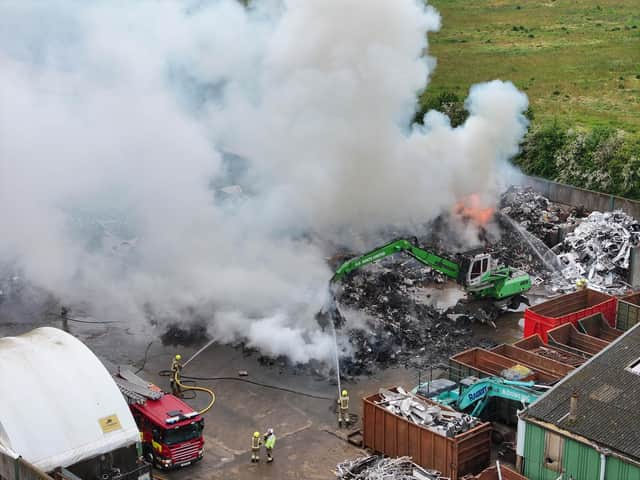

A spokesperson for West Sussex Fire & Rescue Service said: “We were called at 4.10pm on Saturday, 2nd May to a fire at Ford Industrial Estate.
“Joint Fire Control mobilised four fire engines and a water carrier to the scene. Upon arrival crews found a large pile of scrap metal well alight. Firefighters wearing breathing apparatus extinguished the fire using hose reels and jets.
“Due to the nature of waste fires, it is difficult to ascertain the cause of fire however, in this case, it is believed to have been caused by a lithium-ion battery.
“The last crew left the scene at 8pm.”
The family-run business thanked the firefighters for their “outstanding work and support in bringing the situation under control.”
Confirming that everyone involved is safe, HD White said it was back open for business.
Writing on Facebook, the company also apologised to their neighbours for the disruption, noting, “We are devastated that this has happened again.”
“It is the second time in seven months that there has been a fire on the site.
“HD White believes, “Incidents like this are becoming more common in the recycling industry.”
The company issued a warning to the public to be aware of how they are disposing of waste goods with small batteries: “So many batteries are integrated, and people aren’t even aware that they are there – they aren’t visible.”
Lithium-ion batteries can be found in vapes, phones, power tools, and even e-bikes. The National Fire Chiefs Council (NFCC) notes that in 2023-24, there were over 1,200 battery fires in bin lorries and at waste sites in the UK - an all-time high and an increase of 71% from 700 in 2022.
A statement from the NFCC read: “When crushed or damaged lithium-ion batteries can be dangerous to the public, waste operators and firefighters as they cause fires that are especially challenging to tackle.
They can lead to explosions and chemical exposure, but they create their own oxygen, which means they can keep reigniting, prolonging incidents with smoke and fumes affecting neighbouring areas and communities for long periods of time, up to a week.”