
The 87-mile-long South Downs National Park was designated as a haven for nature with some of the rarest habitats in the world – reptile-rich heathlands, chalk grasslands brimming with blue butterflies, wildlife-rich wetlands and woodlands full of bird song.
But, like so much of Britain in the 20th century, nature had been marginalised in some parts, often just about surviving in isolated ‘island’ habitats, leaving some species in danger of local extinction.
The creation of the South Downs National Park has started to turn the tide on that biodiversity loss, with concerted efforts over the past 15 years to create bigger, better and more joined-up habitats where animals and plants can thrive.
As the National Park celebrates its 15th birthday on March 31, 15 biodiversity success stories are being shared.
Jan Knowlson, biodiversity officer for the National Park, said: “Nature gives us everything. The air we breathe, the water we drink, and the food we eat – it’s all dependent on biodiversity.
“The South Downs National Park has some of the rarest wildlife in the UK and is a last bastion for many species, so it’s vital that we protect them and strive to ensure that nature is thriving, rather than merely surviving.
“Through our ReNature campaign and many innovative partnerships, we’ve done a huge amount in the past 15 years to help wildlife and these efforts will continue at great pace. Ultimately, we want nature everywhere, for everyone.
"One of the wonderful things about National Parks is they are places where people and nature can come together.
“Nature recovery doesn’t happen overnight, but we’re seeing the green shoots of recovery.
"Many of us will remember the days when you’d come back from a drive in the country with a windscreen splattered with squashed insects.
If we can get back to those days, we’ll know that nature recovery is really working.”
To find out about the National Park’s ReNature initiative and to donate visit www.southdowns.gov.uk/renature
Take a look through the South Downs National Park’s 15 biodiversity success stories below...
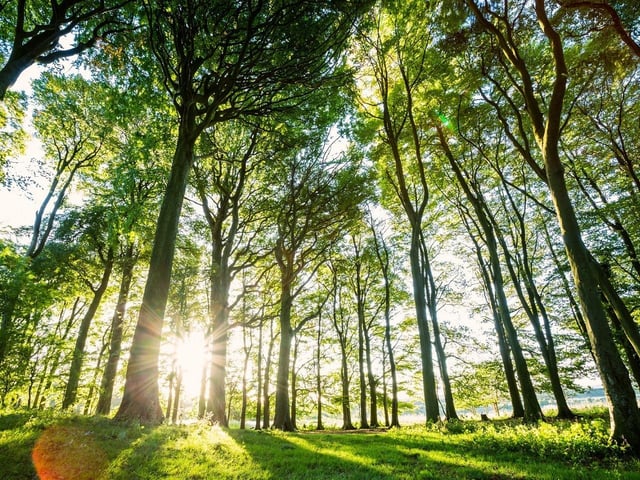
1. An area bigger than Portsmouth has been created for wildlife
Four years ago the South Downs National Park set a goal of transforming 13,000 hectares – or over 20,000 football pitches – into habitat for wildlife by 2030. Under the ReNature initiative, a total of 6,082 hectares – an area bigger than Worthing or Portsmouth – has now been created or improved to help nature thrive. The work has included planting over 70,000 trees to help woodland birds such as the great-spotted woodpecker and blue tit, as well as adding over 100 hectares of wildflowers to help pollinators. Photo: Contributed
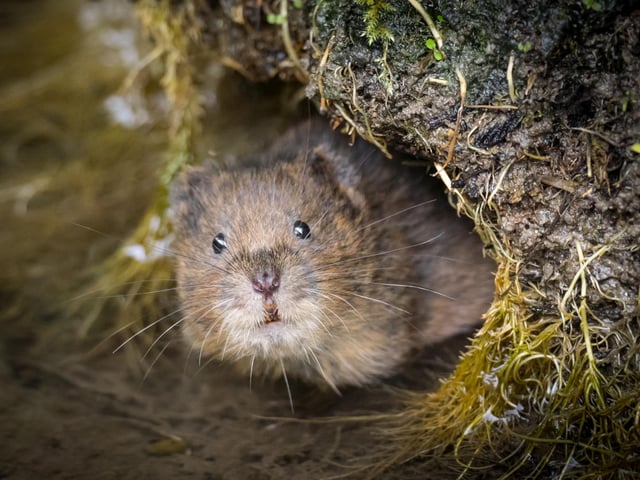
2. 'Ratty’s' remarkable return
A recent ecological report showed that the animal made famous by The Wind in the Willows is making a strong comeback in the National Park. A re-introduction programme started in 2013 and has seen the release of over 2,800 water voles. The report concluded that the furry mammals are indeed thriving, and busily breeding, on the river. Thanks to the re-introduction by the Meon Valley Partnership, the otter has also returned to the River Meon, with evidence there may be three breeding females. Ecologists have found evidence of a wealth of other wildlife, including hazel dormice, hedgehog, harvest mice, brown hare, badger, grass snake, common lizard, Cetti’s warbler, kingfisher, lapwing, marsh harrier and brown trout. Water voles are important to a river habitat as they provide a good meal for predators like otters, herons and marsh harrier. They are also known as “engineers” for thriving wetland ecosystems as their continual nipping and grazing of riverbanks helps to create flower-rich habitat for insect species such as bumblebees, moths and butterflies. Photo: Dick Hawkes
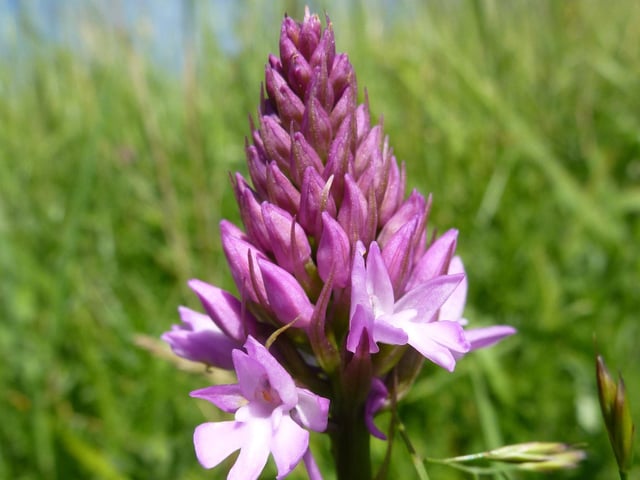
3. The Round-Headed Rampion and the Pyramidal Orchid
The Round-Headed Rampion, also known as the ‘Pride of Sussex’, can be found throughout the Sussex and Hampshire Downs. Scrub removal followed by sheep grazing has allowed this chalk grassland specialist to flourish. This has only been possible thanks to partnership working at sites like Old Winchester Hill, where the combined efforts of the SDNPA, Natural England and our Volunteer Ranger Service has really helped the recovery of this species. Meanwhile, The Pyramidal Orchid is another chalk grassland favourite in recovery. Scrub management by our volunteers, staff and contractors takes place during the winter months and has helped increase numbers of this beautiful flower. Photo: Contributed
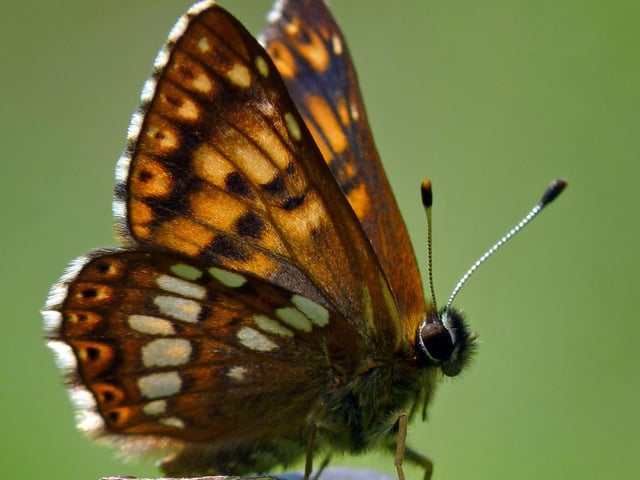
4. Duke of Burgundy butterfly
The nationally declining and threatened Duke of Burgundy butterfly has responded spectacularly to habitat management work performed as part of the South Downs Way Ahead Nature Improvement Area (NIA), recovering from the brink of extinction and extending its territory. The pioneering work involved the SDNPA, Wiston Estate, Steyning Downland Trust, and Butterfly Conservation and has seen population numbers increase significantly. Photo: Neil Hulme