
Why are there so many flies in Sussex at the moment?

Swarms of flies have been spotted across Sussex in recent weeks – but what is behind the sudden influx?
If you’ve noticed an increase in flies congregating outdoors recently, you’re not alone.
Residents across Sussex have been taking to social media to ask why the critters appear to be gathering on cars and garden furniture – particularly those with white surfaces.
The insects are likely cluster flies, according to the British Pest Control Association (BPCA), and are displaying typical seasonal behaviour.
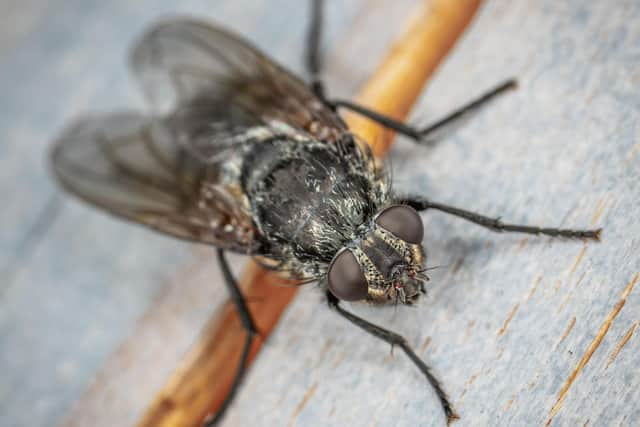

Niall Gallagher, technical compliance manager at BPCA, said: “Seeing so many flies gathered on cars and garden furniture can be unsettling, but this is consistent with seasonal behaviour as adult flies seek sheltered places to spend the winter.
“Cluster flies often gather on sunny, light-coloured surfaces before finding their way into gaps around buildings.”
A professor at the University of Sussex said the increase in population could be down to the climate.
Dave Goulson, professor of biology, speculated: “The long hot summer followed by a very mild and warm autumn has encouraged populations of some common insects to grow larger than usual. In particular, there seems to be an abundance of small fly species.
"At the same time, there are now few flowers available for them to feed on. Many flies like to feed upon white flowers, such as cow parsley and hogweed, and may mistake white vehicles for unusually large flowers.”
The BPCA said the flies’ presence ‘does not automatically indicate poor hygiene or a problem with waste collections’.
"Flies gathering to overwinter may have developed elsewhere and travelled to the area,” Niall added.
“If these are cluster flies, they do not bite people and are principally a nuisance in homes. Flies resting outside will often need no treatment.
“Residents can help prevent flies entering their homes by repairing insect screens and sealing gaps around windows and doors, while maintaining ventilation. Small numbers indoors can be vacuumed up. If large numbers repeatedly enter a property, a BPCA member pest management company can identify the species and recommend suitable action.”