
On the Grapevine with Richard Esling: From Noilly Prat to the nation’s wine lists
There are few French wines that have enjoyed quite such a meteoric rise in Britain as Picpoul de Pinet. Twenty years ago it was barely known outside its corner of the Languedoc. Today it is a familiar name on supermarket shelves and it seems to be included on almost every restaurant wine list, particularly wherever oysters, mussels and seafood are involved.
Picpoul – or more correctly Piquepoul Blanc, the ancient grape variety behind the wine – has been grown around the Étang de Thau in the Languedoc region for centuries. The name is thought to refer to its naturally high acidity, and that characteristic remains at the heart of the wine.
Dry, light-bodied and wonderfully refreshing, Picpoul combines lemon and lime, green apple and white peach with a subtle saline, almost sea-spray character. It is crisp without being aggressively sharp, making it one of those wines that seems to disappear rather too quickly from the glass.
The secret lies partly in the location. The vineyards stretch around the great Étang de Thau lagoon, close to the Mediterranean between Montpellier and Béziers. Sea breezes temper the heat, while the maritime influence helps retain acidity as the grapes ripen.
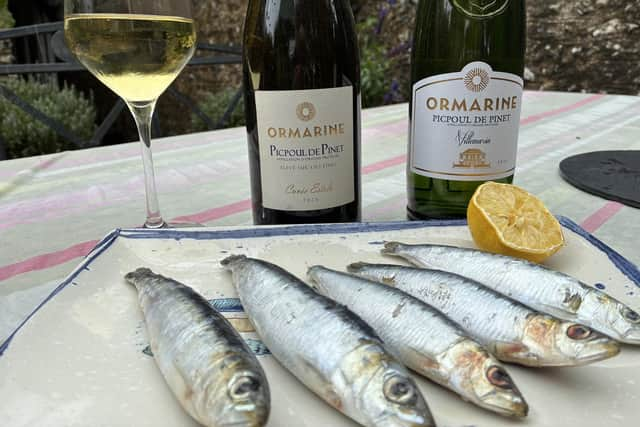

This is a remarkably specific terroir: virtually all of France’s Piquepoul Blanc is concentrated here, with the Picpoul de Pinet appellation encompassing around 1,500 hectares. The result is a wine that is difficult to replicate elsewhere.
Yet Picpoul once had a very different destiny. The grape was historically an important component of the local vermouth industry, alongside Clairette and Terret. The vineyards around Pinet supplied wines for the flourishing vermouth trade, particularly for Noilly Prat, whose historic home is just along the lagoon at Marseillan. Indeed, when the Cave de l’Ormarine was founded in 1922, its entire production was bought by Noilly Prat.
However, the vermouth market declined dramatically in the latter decades of the twentieth century. The growers needed another future for their grapes. Investment in vineyards, temperature-controlled fermentation, improved pressing and more sophisticated winemaking transformed the quality of the wines.
Recognition first came with AOC status in 1985 and ultimately with Picpoul de Pinet becoming a standalone AOP in 2013. Production has subsequently soared from 1.7 million bottles in 1985 to more than 10 million today.
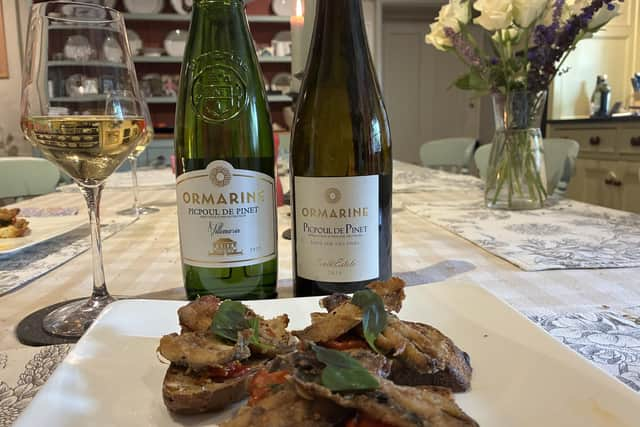
Ormarine, founded by Pinet growers in 1922, has been central to that transformation. It is both a substantial producer and an innovator, investing in modern winemaking while increasingly embracing sustainability. Its growers use pheromone mating-disruption techniques to reduce chemical treatments, some have converted to organic farming, and the cellar achieved Terra Vitis certification in 2018.
Its classic Villemarin Picpoul de Pinet demonstrates why the category has conquered Britain: vibrant citrus, green apple, freshness and that delicious hint of the sea. It is uncomplicated in the best possible sense – affordable, versatile and almost irresistible with seafood.
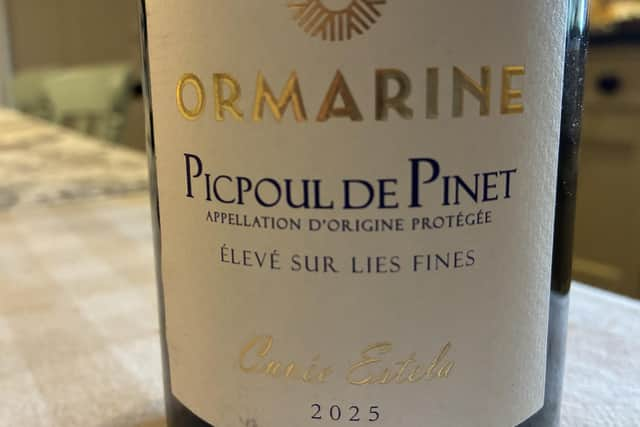
But Ormarine is also showing that Picpoul can be much more than a refreshing summer aperitif. Cuvée Estela, aged for at least six months on its fine lees, has greater weight, texture and complexity, with lemon, lime, orchard fruit and a richer, more rounded palate. It opens the door to more substantial dishes, from creamy mussels to richer fish and even cheese.
Both are available from Majestic - £9.50 for Villemarin and £14 for Cuvée Estela at mix six prices.
Perhaps that is the most fascinating part of Picpoul’s story. A grape once destined largely for vermouth has reinvented itself as one of the most successful regional wines of modern France.
Its future looks every bit as bright as its past was uncertain.