
RSPB column: It’s raining pine cones! This month look out for Crossbills on our West Sussex heaths
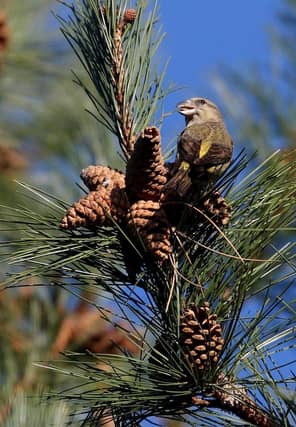

As I’m wandering through the wooded heathland admiring the autumn colours I’m suddenly hit on the head by a falling pinecone! More seem to be raining down from the top of the conifers and I manage to catch one noticing how it has been prised apart. I look up to see half a dozen chunky birds flying off, chatting to one another with loud ‘chip, chip’ calls. My first encounter with Crossbills this year…
Crossbills have uniquely shaped bills where the top mandible crosses over the bottom one, which enables them to prise apart the cones of their favoured Scot’s Pine and Larch to get to the seeds within. Crossbills are unpredictable and nomadic; moving around as the food supply in their breeding area dwindles. Some years we’ll suddenly get large numbers of Crossbill roaming around in search of food – these are known as irruptions.
There have been good numbers of Crossbills in the area so far this autumn – as I’ve been out and about on the wooded heathland at RSPB Pulborough Brooks, I’ve often heard (then seen) flocks of a dozen or so flying overhead. Look and listen out for them on any of the Sussex heathlands that lie on the Green Sand ridge between the nature reserve here and Iping and Steadham Commons west of Midhurst.
Feeding high in the conifer canopy, they can be tricky birds to see, but thankfully they are quite vocal, calling as they fly with a loud ‘chip, chip’ call. The alternative is to locate them as twirling pine seeds (and occasional cones) drop towards the woodland floor - I still have my caught pinecone in my collection of natural treasures. They are beautiful birds – the males brick-red and the females olive-green – so it’s worth being patient to catch a glimpse.