
Concerns over 'dangerous plants' growing on land off major Horsham road
Concerns are being raised over dangerous plants spotted growing on land off a major Horsham road.
Residents are worried that the giant hogweed plants – whose sap can cause severe skin burns – could pose a danger to children and pets.
The plants have been reported growing off a footpath from Guildford Road near Boldings Brook where a number of ash trees were removed earlier this year.
Many people have taken to social media to share their concerns about the invasive plant which can reach up to three metres tall.
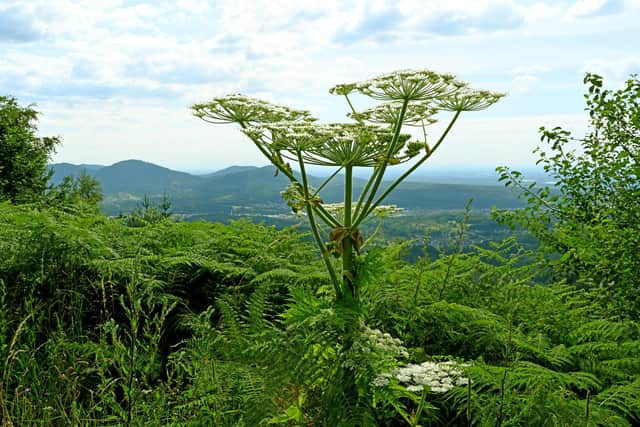

Some are blaming this year’s heavy rainfall for the plants spreading. One person said: “We live on Guildford Road, this is the first year I’ve seen them away from the river banks and now on flat land. Most concerning.”
Experts from the Royal Horticultural Society say that giant hogweed, originally imported to Britain from Russia, “can cause severe skin burns. It is widely distributed in the wild and poses a serious risk to people who are unaware of its potential for harm.”
Chemicals in the sap can cause photodermatitis or photosensitivity, where the skin becomes sensitive to sunlight and may suffer blistering, pigmentation and long-lasting scars.
A spokesperson for Horsham District Council said: "Horsham District Council's Environmental Health and Licensing team has not been approached about this situation."It is not illegal to allow giant hogweed to grow on private land, but only to let it spread onto neighbouring land. It is therefore the responsibility of the landowner to control its growth."The council does not enforce the Wildlife and Countryside Act 1981. This is the jurisdiction of DEFRA and its agencies and advice on how to report non-native invasive species spreading to the wild is available via the Non-Native Species Secretariat at www.nonnativespecies.org"More guidance is available at https://www.gov.uk/guidance/invasive-non-native-alien-plant-species-rules-in-england-and-wales"Problems can be reported to the Non-Native Species Secretariat www.nonnativespecies.org via their website."
West Sussex County Council is responsible for weed control on roads and pavements. A spokesperson said: “We use specialist treatment methods for harmful weeds, such as giant jogweed and Japanese knotweed. If you notice any of these weeds on the highway, please report it online. If the weeds are located on private property, then these are the responsibility of the landowner.”