
Residents voice concerns at meeting after 'millions' of plastic beads wash up on East Sussex beach
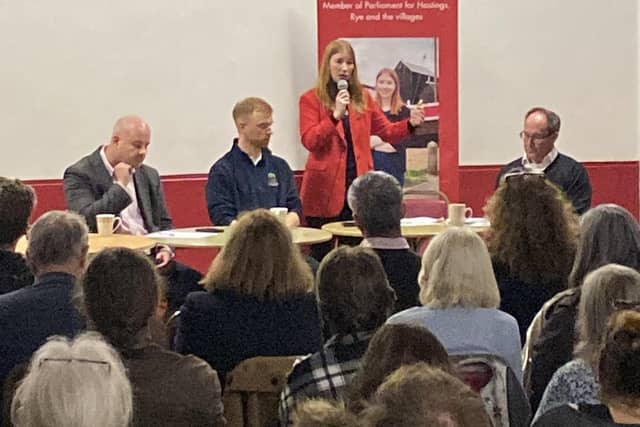

One hundred residents attended a meeting after 'millions' of plastic beads were washed up on beaches.
The bio-beads appeared on Camber Sands beach on November 7 and have since been found elsewhere along the coastline and in Romney Marsh.
A meeting organised by Hastings and Rye MP Helena Dollimore was held last Thursday (November 13) in Rye.
Ms Dollimore said Southern Water bosses answered questions from residents and agreed to pay for the clean-up operation and organise for marine surveyors to assess the damage to marine life, as well as funding a long-term programme of nature restoration in the area.
Ms Dollimore said: “Southern Water has a responsibility to clean up their own mess and make amends to our community. It was devastating to discover the beads in Rye Harbour Nature Reserve and I have asked government officials to undertake a full veterinary analysis of the potential harm to our local wildlife. Southern Water has made a commitment to fund a programme of nature restoration in our beautiful area, and I will hold them to that promise.”
A Southern Water spokesperson said: “We will meet the cost of the clean-up, including the specialist equipment and contractors that the council needed to hire to remove beads from the beach.
“We are so sorry that the beads escaped from our treatment works, and that substantial quantities washed up on Camber Sands.
“Southern Water is clear that our response to this incident will need to be sustained and long-term.”
A Sussex Wildlife Trust spokesperson said: “Sussex Wildlife Trust is devastated to see millions of bio-beads washing up on the coastline of East Sussex.
“These tiny black bio-beads are plastic pellets that are used in the later stages of wastewater treatment and we now know that this came from a failure at a Southern Water Wastewater Treatment Works in Eastbourne.
“Their impact on wildlife is horrendous. Not only do they remain in the environment for decades, if not hundreds of years, but their size, shape and buoyancy can make them easily mistakeable for food to many different species of marine wildlife with profound implications for food chains.
“We extend our sincere thanks and respect to those organisations co-ordinating the volunteer-led response to date and remain ready to support them when needed. If you spot any bio-beads on the beaches of East Sussex please report them to Strandliners who are recording the extent of the environmental catastrophe.”
Volunteers from charities Strandliners and Nurdle have been working to remove the bio-beads.
Emma Hardy, the Parliamentary Under-Secretary of State for Water and Flooding, also met with Ms Dollimore and volunteers. She said: “The volunteers have been amazing. Just incredible. I’ve been hearing how people have spent many hours brushing up the beads, literally using dust pans and sieves.”