
Storm-toppled Crawley tree was not on council's regular inspection programme

A historic lime tree brought down during Storm Austen in Crawley was not on a regular tree inspection programme, West Sussex County Council has confirmed.
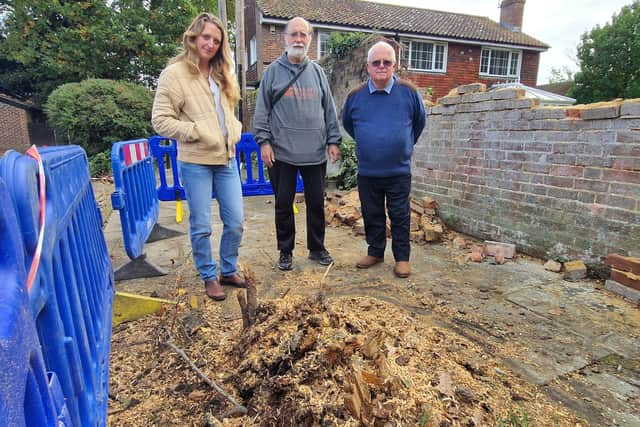
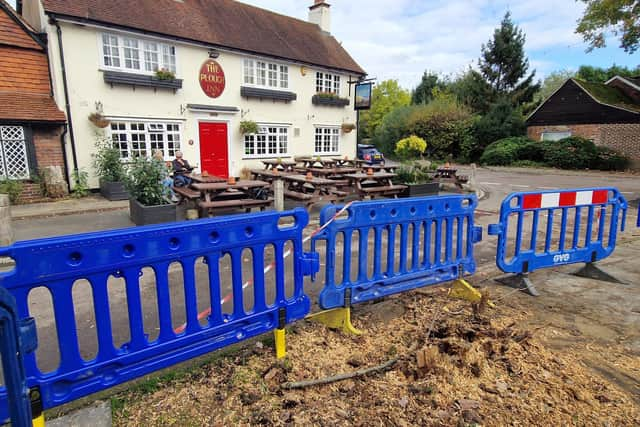
The small-leaved lime, believed to have been around 300 years old, stood opposite The Plough pub in Ifield Street. It fell on Friday, October 23, during Storm Austen.
Responding to questions about its maintenance, the council said the tree belonged to the highway network and was the responsibility of West Sussex Highways.
A 2015 inspection found it to be in good overall condition, with its trunk and branches assessed as fair and its leaves, shoots and buds rated good.

Although the tree was not on a regular inspection programme, the council said the road was included in annual highway inspections, during which visible tree issues are reported for further assessment where necessary.
“The tree belongs to the highway network, but it is not on a regular inspection programme,” a council response said.
“The road is included in annual highway inspections, during which any visible tree issues are reported to the Tree Team for further assessment if needed.”
The council said it uses a risk-based approach to inspecting and maintaining around one million trees across West Sussex, focusing resources where they are most needed.
An assessment will be carried out to establish why the lime fell. The response did not confirm whether internal decay was present.
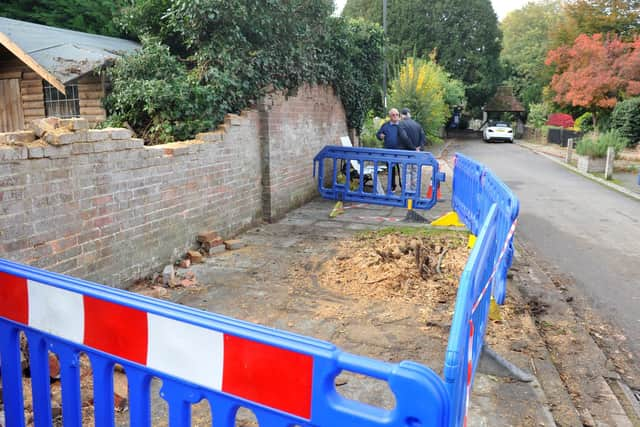
The falling timber damaged a garden wall, but The Plough and nearby Old Plough Cottage escaped damage. Nobody was reported injured.
The council also confirmed that the tree stood within Ifield Village Conservation Area.
West Sussex Highways is responsible for clearing it, and there are plans to preserve the timber.
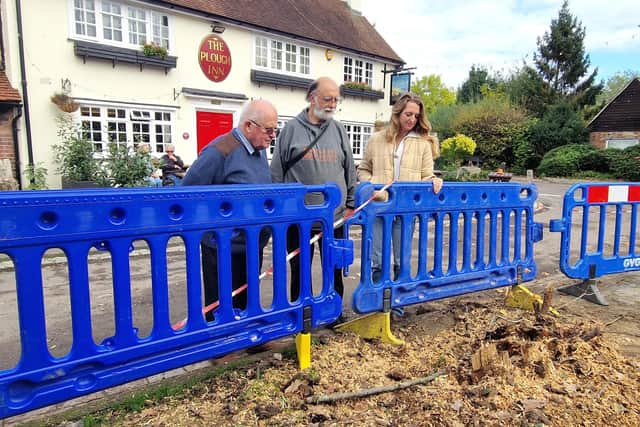
The confirmation follows a suggestion from Richard Symonds, of The Ifield Society, that a memorial or replacement planting could mark the loss of the village landmark.
Mr Symonds used the spot as the starting point for his Saturday morning walks around the parish.
“You take it for granted that these trees just will stay there all the time,” he said.
He hoped to discuss possibilities with The Plough’s landlord, saying: “I think it’s worthy of some kind of memorial.”
Asked whether it could support a replacement or memorial, the county council said requests could be made through its Donate a Tree scheme for the 2027/28 planting season.
No replacement planting or memorial has been confirmed.
Mr Symonds said the direction in which it fell was fortunate, as it could otherwise have caused serious damage to nearby buildings.
Questions about its history include a theory that it was planted to help mask smells from a butcher’s shop opposite.
Mr Symonds said its sweet-smelling summer flowers might have acted as a natural air freshener, although he stressed that the reason for its planting was uncertain.
According to Mr Symonds, Harrow Cottage was formerly the butcher’s premises, and its resident has preserved an old shop sign, previously displayed in the garden and now kept inside.
The cottage stands near Old Plough Cottage, which formerly served as the village pub.
Mr Symonds said the lime may have witnessed centuries of change as a once-bustling village became part of Crawley.
He described the short stretch of Ifield Street around the pub and St Margaret’s Church as a place rich in local history, with traces of village life surviving despite modern development around it.