
Mid Sussex District Council welcomes £2.5bn Government investment in AI and quantum technologies

Mid Sussex District Council (MSDC) has said it welcomes the Government’s announcement of a £2.5bn investment in AI and quantum technologies.
The package of measures was unveiled at www.gov.uk/government on Tuesday, March 17.

MSDC said the money aims to stop UK tech firms ‘drifting abroad’ and ‘ensuring home‑grown innovation scales in Britain’.
MSDC described the Sussex and Greater Brighton area as ‘already one of the UK’s most advanced quantum clusters’, saying that independent analysis from Oxford Economics (commissioned by MSDC) shows the region ‘has the potential to generate £1.2-£1.9bn GVA locally and £2.5-£4.1bn nationally by 2050, supporting up to 40,800 jobs across the UK’.
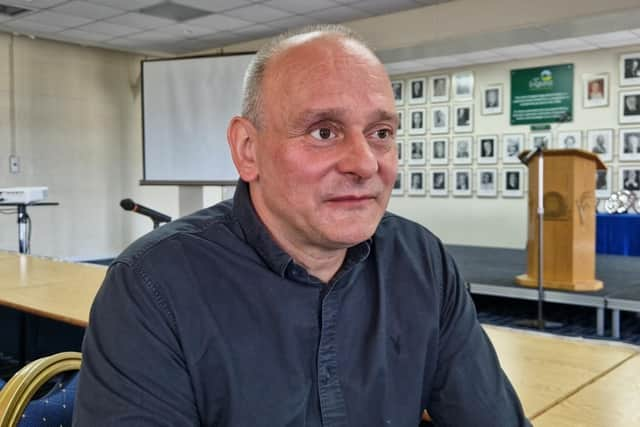
MSDC Leader councillor Robert Eggleston said: “This investment is a game changing moment for Mid Sussex and the UK. It sends a clear signal to global investors that Britain intends to lead the quantum revolution.
“Our region already has the talent, supply chain and infrastructure ready to grow this industry – and with Government backing, we can anchor sovereign capability, retain high value businesses and create thousands of skilled jobs for local people.”
Professor Winfried Hensinger, Professor of Quantum Technologies, co-director of the Sussex Centre for Quantum Technologies and Head of the Ion Quantum Technology Group at the University of Sussex, said: “The Chancellor’s plan recognises longstanding concerns that innovative UK firms seek capital and support overseas. The £2.5bn commitment aims to reverse that trend, ensuring quantum technologies – expected to generate up to 100,000 jobs – flourish domestically.
“We know Sussex and Greater Brighton is ready to support this growth and look forward to working with the Government to bringing this forward in the Sussex Quantum Silicon Valley.”
In an interview with this newspaper in July 2025, Prof Hensinger said: “In greater Brighton we’re actually making really big steps towards the realisation of real quantum computers and quantum sensors.”
He also said it could be possible to measure very small electric fields, possibly from the human brain or body, to help with the treatment of mental health and brain conditions. Prof Hensinger told the Middy that his research group started at the University of Sussex more than 20 years ago when quantum computers were thought of as borderline fantasy. He said they take advantage of the principles of quantum mechanics and quantum phenomena (like entanglement and superposition) and use ‘qubits’ to perform complex calculations.
The full interview is available at www.sussexexpress.co.uk.
MSDC said the independent research identified that the Greater Brighton area hosts one of Europe’s largest vacuum and mu-metal manufacturing clusters, a world-leading research base at the University of Sussex (including the UK’s first four-year quantum technology degree), the UK’s first online distance learning quantum technology MSc, and a major EPSRC doctoral training centre, and Universal Quantum, which develops practical utility scale quantum computers. This company has over £100m of funding and £65m in customer contracts.
To further support the development of the sector locally, MSDC said it has: allocated a 48‑hectare Science & Technology Park to anchor quantum and advanced technology companies, helped establish the Quantum Sussex Cluster to unify partners, investors and innovators across the region; and supported the vision for a Sussex Quantum Silicon Valley, which MSDC said could ‘unlock billions in private investment and deliver world leading quantum facilities’.