
Horsham Society: Demise and revival
See the latest news from Your World at https://www.sussexexpress.co.uk/your-world
This weeks column is by Oliver Farley
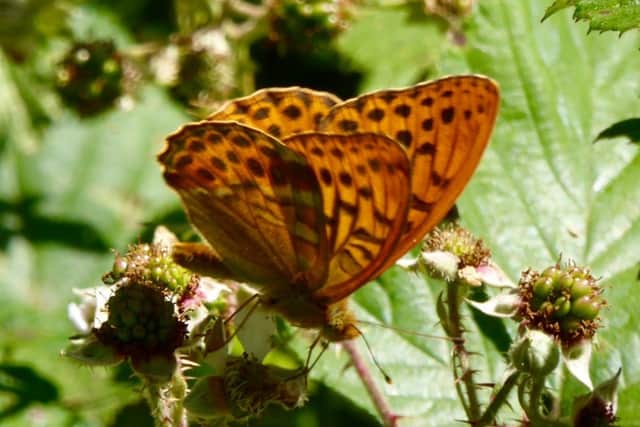

Along with the rest of the country Horsham suffered the rigours of the Covid pandemic. Lock downs were long and difficult to bear while the consequences of unavoidable interruptions were hazy to forecast. The cessation of normal rhythms of social activity proved fatal for quite a few societies, among them the Horsham Natural History Society (HNHS). It was formed on the 28th of March 1948 and came to a close in 2020 when insufficient members could be found to continue.
Some of HNHS records show a perspicacious attitude towards natural history and growing concern; it is instructive to compare these concerns with the vigour of today’s activity.
Buried among the files are three from 1894, 1895 and 1896. They carry the imposing title of Phenological Observations, made by the Horsham F.C.C. Museum in the district of Horsham during the year 1895, recording the first appearance of plants, insects and songbirds, in over13 pages for that year.
Since then, one of the clearest warnings of global climate change is the increasingly early appearance of seasonal flora and fauna, so much so that climate action is required right down to the level of local councils and citizens. Last September Councillor Colette Blackburn used her column in the WSCT to call for a sharing of views on a climate strategy. We need to “restore and support our natural environment” she says while the illustration shows a map of the powerful Pacific Ocean current El Nino, confirming the global nature of the challenge.
The detailed records from the HNHS are too fragmented to be of much use now. Where this 19th century data came from is unclear but the message for today is unavoidable. The later records show how the then emerging phenomenon of man-made natural changes was becoming an area of concern to these naturalists of past decades. For example, there is a survey from 1964 on kestrels in Horsham, made at the request of the Sussex Ornithological Society in response to the effect of toxic chemicals on birds. This is only two years after Rachel Carson’s seminal book Silent Spring about environmental science.
Some progress is being made. As reported from last August’s WSCT, there is the heartening account of the revival of butterflies at Brookhurst Wood, a landfill site, once a desert now a thriving home for rare insects.
Other recent reports tell of a grant of £250,000 to Warnham Local Nature Reserve, a Green Flag award for the Friends of Horsham Park, and the AGM of the Friends of Chesworth Farm reported success with dormice and butterflies. Sixty-two years on from the 1964 survey the Chesworth Friends are still concerned for kestrels and are assisting them with nest boxes.
The world has changed a lot since 1895, but the need to support nature is an ongoing battle; the present forms of support have changed but the necessity still commands the dedication of Horsham’s concerned citizens.
For more information see www.horshamsociety.org