
South Downs National Park smashes 100,000 trees target

The South Downs National Park has smashed its target of planting 100,000 trees by the middle of this decade – and sights are now set on planting at least one-million more.
The huge tree planting drive includes a much-needed resurgence of the iconic elm tree, a lost beacon of the British countryside due to elm disease. A total of 3,500 disease-resistant elms will be in the ground by the end of this winter, providing havens for threatened species such as the white letter hairstreak butterfly.
The Trees for the Downs campaign launched at the end of 2019 and has far exceeded all expectations, raising more than £400,000 from donors and members of the public to kickstart nature restoration across the region.
This winter alone, more than 40,000 new trees are going into the ground, bringing the total to 117,700 trees across 150 sites in Sussex and Hampshire.
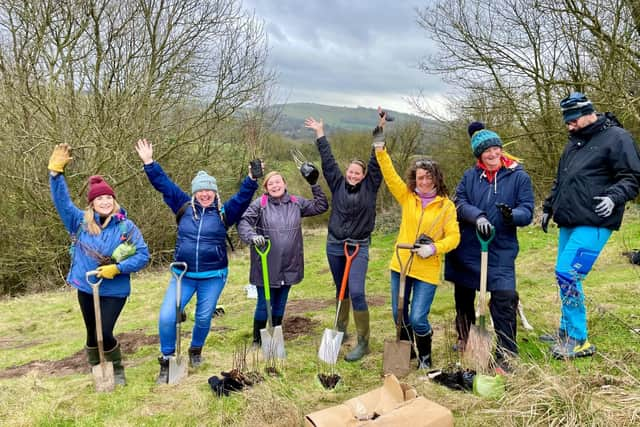

A national park spokesman said: “The tree planting is a mixture of woodland, civic and community planting, hedging and orchards, all providing a range of oxygenating, carbon-storing trees to provide homes for birds, mammals and insects.
“But the campaign, led by the South Downs Trust, the official charity of the National Park, is just getting started. A target has been set to plant one-million more trees between now and 2035, focusing on identifying suitable sites for tree planting, including new woodland and hedges.
“The potential for planting trees in the region is huge. A major study three years ago covered just over 439,000 hectares – all of Sussex plus Hampshire’s portion of the National Park – and found almost 23,000 hectares is highly suitable for creating new woods – around five per cent of the land area. The potential new area of woodland – twice the size of Manchester – could store up to 37,667,500 tonnes of carbon dioxide after 100 years.”
The national park authority said none of the tree planting would have been possible without significant support from businesses and the public. Among the donors were: Aspinal of London, the Boltini Trust, Boomtown Festival, Chalk Cliff Trust, Friends of the South Downs, Higgidy, Jude’s, London to Brighton EV Rally, Nyetimber, OSB Group, South East Water, Sykes Cottages, Southern Co-op, the University of Sussex, Willmott Dixon, together with founding patrons of the charity and hundreds of members of the public.
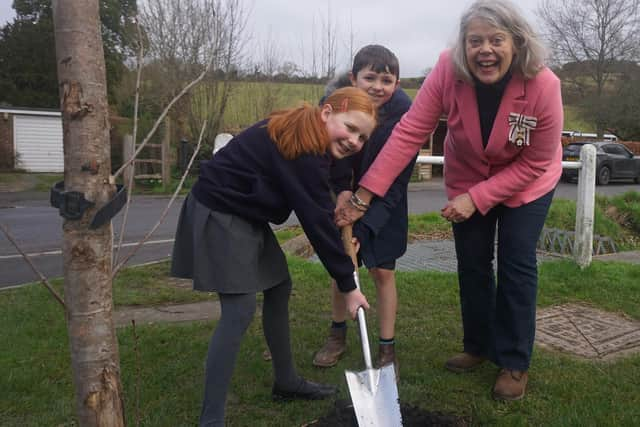
Nick Heasman, of the South Downs National Park Authority, a forester and ecologist helping to lead the campaign, said: “When we launched Trees for the Downs six years ago, we were never quite sure how big it would become.
“The reaction has been nothing short of extraordinary and I think it underlines people’s affection for trees. In a tough and uncertain world, trees really are a symbol of hope and restoration and that’s exactly the impact they are having in the South Downs National Park.
“It’s a big moment for us to have reached our target as we celebrate the National Park’s 15th birthday.
“Trees provide clean air for us to breathe, enrich our soils, provide vital habitats for wildlife and are amazing at capturing carbon carbon. Trees such as ash and elm have been facing unprecedented threats from diseases, but we’re slowly fighting back. It’s wonderful to see elms back in the landscape for future generations.”
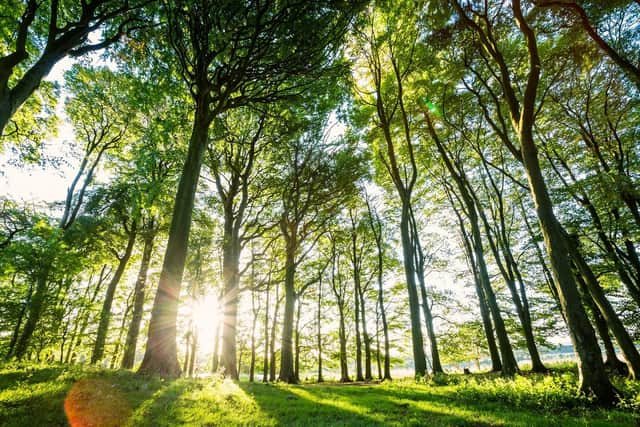
Nick added the focus would continue to be planting a variety of native species in the right places, which would ‘be crucial to tackling biodiversity loss and a changing climate’.
“It’s a real mixture of treescape we’re creating, including many new hedgerows which are real powerhouses for nature recovery,” he said. “Tree planting is a key part of the National Park’s ReNature campaign to create much-needed and diverse wildlife habitats across this region, including woodlands, wetlands, grasslands and wildflower meadows.”
Vanessa Rowlands, chair of the national park authority, which has been working with the trust to deliver the tree planting, said: “This is the most fantastic, inspiring news and shows what National Parks can achieve when we all pull together for nature and climate.
“I’d like to thank each and every organisation and individual who has contributed to this wonderful effort. Your support will make a huge difference for decades to come, creating a lasting legacy for the natural environment that everyone can be really proud of.”
Some notable highlights of Trees for the Downs include: more than 2,800 trees are currently being planted to create a new woodland in front of Levin Down in West Sussex – Singleton Primary School will use the woodland for outdoor classes and it will help boost biodiversity on the Goodwood Estate; an avenue of disease-resistant elms have been planted at Centenary Park, Peacehaven, creating a new gateway to the National Park; four elm trees have been planted in Alfriston, East Sussex – the ‘Elms of the Fallen’ will remember lives lost during the First World War and almost 850 black poplars, an under-threat native species known for its knobbly twigs and fluffy, cotton-like seeds, have been planted as part of the Sussex Black Poplar project – black poplar helps to provide food for the caterpillars of many moths, including the hornet, wood leopard, poplar hawk and figure of eight, and the flowers provide an early source of pollen and nectar for bees.
Additionally, almost 30,000 trees were planted as part of the Queen’s Green Canopy initiative, in memory of Her Late Majesty. A special tree, ‘The Queen’s Elm’, is growing well at Seven Sisters Country Park, which is owned by the National Park Authority.
A fresh round of expressions of interest are being invited for new tree planting in the National Park next winter. Visit southdownstrust.org.uk/trees-for-the-downs-fund for more information, or email Miriam Swan via [email protected]
Anyone who would like to donate to Trees for the Downs can do so at southdowns.enthuse.com/TreesForTheDowns