
Volunteers remove 867kg of litter from Chichester’s precious chalk stream

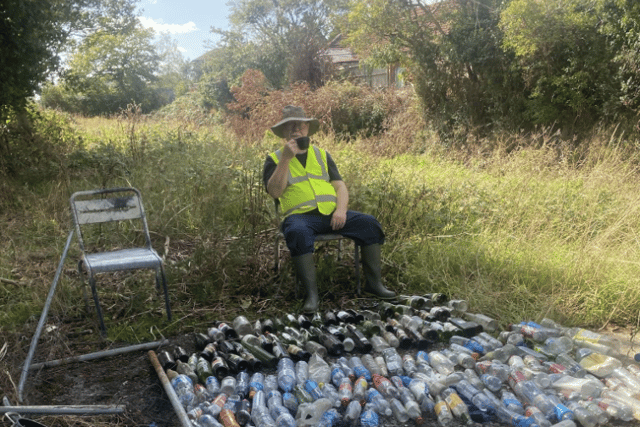
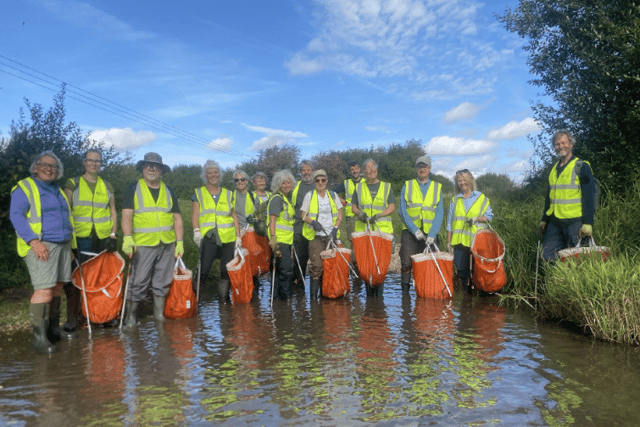
Across three days in September, 42 volunteers cleared 2.5km of Chichester’s River Lavant – removing 867kg of litter in the process.
The volunteers, overseen by Final Straw Foundation and Western Sussex Rivers Trust, focused on where the river runs near Apuldrum, Barnfield Drive, and Westhampnett Road.
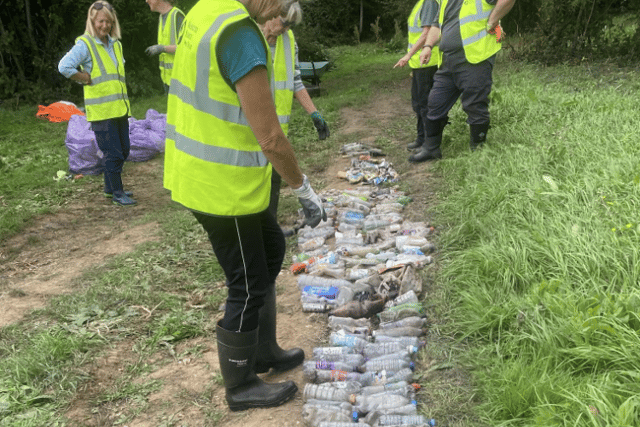
The whopping 867kg of litter included 530 cans, 363 plastic bottles, 170 glass bottles, 20 shotgun cartridges, three shopping trolleys, two paddling pools, and even a garden sofa.
The River Lavant, which runs through Chichester and empties into Chichester Harbour, is a chalk stream – a rare and vital type of river that Final Straw Foundation describes as “the UK’s equivalent of the Great Barrier Reef”.

Chalk streams provide both rich habitats for wildlife and a water supply for people, but are in poor condition due to over-abstraction of water, pesticide run-off from agricultural land, plastic pollution, tyre particles from road run-off, urbanisation, and – something that has come to the attention of Chichester’s MP – sewage pollution.
Jess Brown-Fuller recently called on the Environment Agency to introduce phosphate limits at a wastewater treatment works following concerns about pollution in the Lavant.
Phosphate is a major component of wastewater, and can be found in food residue, household cleaning products, and human waste. It can cause a process called ‘eutrophication’ in chalk streams, where rapid algal growth blocks light and starves the water of dissolved oxygen, suffocating native flora and fauna.
Ms Brown-Fuller has also tabled a parliamentary motion emphasising the danger of discharging wastewater into chalk streams.
Final Straw Foundation explained that, alongside these ongoing issues, 80% of the UK is still in drought status following this summer’s heatwaves, raising concerns about water supplies.
The litter clearing project, however, specifically focused on reducing plastic pollution in the Lavant.
Helen Littlejohn from Final Straw Foundation said: “Water is such a hot topic at the moment, and we all have a responsibility towards our water quality. Plastic waste that we can see doesn’t go away, but breaks down into smaller and smaller pieces, threatening all the wildlife that rely on this ecosystem, ultimately ending up in our food chain and into us.”
She explained that plastic waste contains PFAs, known as ‘forever chemicals’. They can be found in cosmetics, food packaging, pesticides, and stain-resistant fabrics.
“They bio-accumulate, meaning they never go away,” she said. “Scientists estimate that 99% of the global population have PFAs in their blood.”
These ‘forever chemicals’ are linked to an increased risk of certain cancers, alongside hormone disruption, immune suppression, and metabolic issues.
Helen said: “By removing plastic waste from rivers, this reduces the PFAs pollution in our water courses and therefore helps improve our health.”
The clean-up formed part of the River Lavant Restoration Project, led by Western Sussex Rivers Trust. It looks at the whole area to renaturalise the river, reconnect it to its floodplain, reduce local flooding, and educate communities on natural river processes.