
‘Complex’ – London Gatwick chief executive issues update on Northern Runway expansion project
Chief executive Pierre-Hugues Schmit issued an update on London Gatwick’s Northern Runway expansion project following the publication of the airport’s interim financial results.
Gatwick’s second runway can now be brought into full use after the Court of Appeal dismissed a legal challenge brought by campaign groups Communities Against Gatwick Noise Emissions (CAGNE) and Gatwick Area Conservation Campaign (GACC), bringing years of uncertainty to an end.
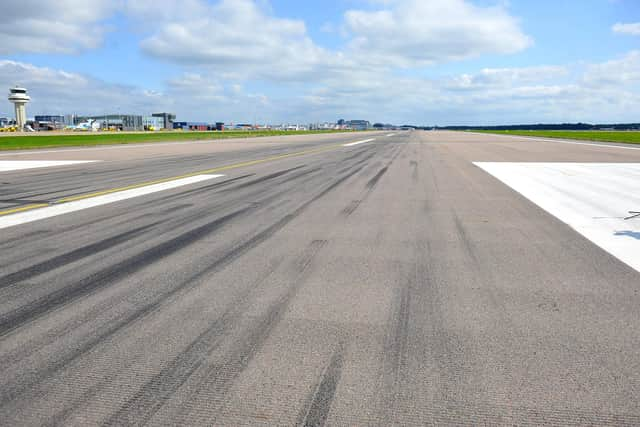
The expansion will see the airport move its emergency runway 12m (39ft) north to allow 100,000 more flights a year.
The second runway, which is scheduled to become operational in 2030, will reportedly bring £1 billion a year into the economy in south-east England and create 14,000 jobs in the region.

Mr Schmit said: “We started when the DCO (Development Consent Order) decision came in September 2025, we started slowly to organise ourselves by hiring a team to do the adjusted design.
“Of course a lot of things have happened since we applied for the DCO, so we needed to revisit all of that.
“We’re still in that phase where we’re looking at the detailed design, the sequence of works. It’s a massive programme of more than 100 packages of works. We will be careful that the sequence of works doesn’t affect the operation.
“The beauty of our scheme is that it’s within perimeter, so we don’t bite into anyone’s garden! But we are also doing all that work in a live operation, so that makes it even more complex.
“We’re looking at that at the moment, so I can’t really answer the question of what comes first – but there is, I would say, ‘families’ within the project.
“We have the runway and taxiways, and everything on that side is the most complex part. We have the road access, we have the terminal expansion and everything that needs to be refitted in some of the terminals, and of course we have everything regarding the sustainability, the water treatment, the biggest one being the water mitigation.
“All of these are going to start at some point, but the sequence of it is being calibrated as we speak in order to do the right thing at the right time.”