
Seven of the Spookiest Stories from Midhurst and Petworth
See the latest news from Your World at https://www.sussexexpress.co.uk/your-world
From ghostly Roman soldiers and headless horsemen to the curse of Cowdray and the forgotten tradition of 'souling', the Midhurst and Petworth area has centuries of chilling folklore. As Halloween approaches, we look at the legends that have haunted the South Downs for generations.

The Curse of Fire and Water
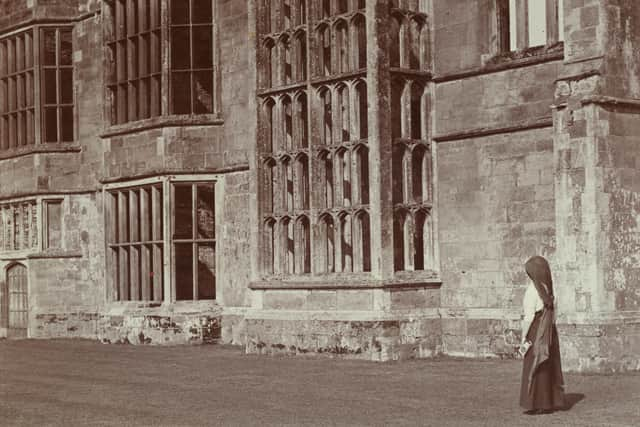
Perhaps the most famous local spooky story is the Cowdray Curse. Legend suggests that during the dissolution of the monasteries, an angry monk cursed the family as they profited from the closure of religious houses.
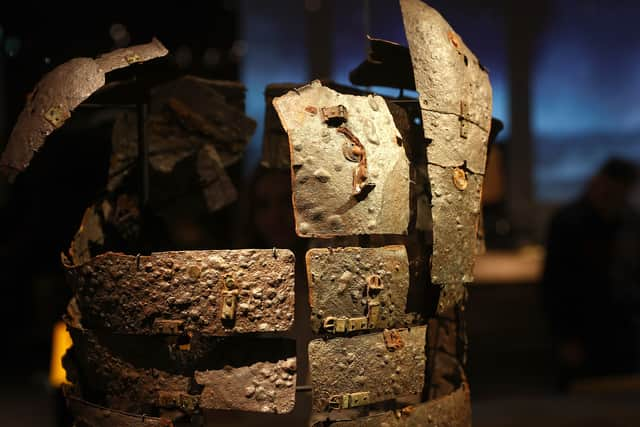
While Sir Anthony Browne feasted in Battle Abbey, the monk prophesied that the curse would “cleave to his family until it ceased to exist.” He concluded with the words, “By fire and water thy line shall come to an end, and it shall perish out of the land”.
It took two centuries for the prophecy to come to fruition. As everyone in Midhurst knows, the great Tudor house burnt down in 1793, and the flames destroyed countless pieces of art, including works by Holbein and Titian as well as artefacts from the Norman conquest.
As the flames simmered over the ruins, George Samuel Browne, the eighth Viscount Montague drowned in the Rhine.
The story did not end there. In 1815, two sons of the Viscount’s sister, Elizabeth Mary Poyntz, drowned while bathing at Bognor on the Sussex coast.
Today the Cowdray ruins are said to be haunted by a Grey Lady, spotted so many times that her regular route has been named “The Lady’s Walk.”
Perhaps she is the same woman who walked through the room of writer H. Rider Haggard when he was staying at Easebourne Priory later that century.
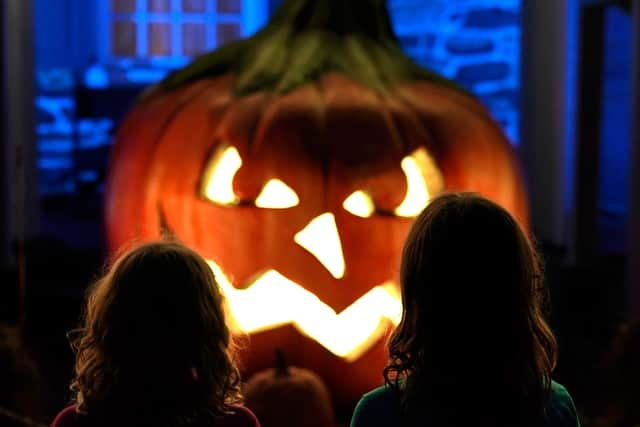
For those intrigued about historic Cowdray, the estate is running various ‘spooky’ activities for children and families over half term week.
The Phantom Choir
St Andrew’s Church in Didling is one of the smallest churches in the district, built as a place of worship for the local shepherds working up on the South Downs.
According to local paranormal folklore, people in the 1940s reported hearing choral singing coming from inside the church when no service was taking place. Some say they heard a full choir, whilst others heard a single, solitary voice.
The Church sits at the bottom of Didling Hill, and from there one can take a beautiful, if steep footpath, up through an ancient yew wood to the South Downs Way. Walkers can then dip down the south side of the downs to the ruins of the deserted medieval village of Monkton.
The Ghostly Traveller
In a recent, tongue-in-cheek survey released by Cinch, Sussex roads are said to be some of the most haunted in the UK.
That was certainly the case for one traveller in 1999, when a trip on the A286 became a somewhat spooky outing.
The man was driving into Midhurst when he witnessed a rather unusual pedestrian. As he slowed down to let the man cross the road, he noticed something strange - he could see right through him.
The pedestrian, wearing an 18th-century tricorn hat, seemed to be completely transparent.
Yet another reason to drive carefully.
The Headless Horseman
If one drives west from Petworth after dark, local folklore suggests keeping an eye on the roadside.
One of the most enduring motifs in English ghost lore is that of the headless horseman, and the roads around Tillington have occasionally been linked to sightings of a decapitated rider.
The figure is usually described as wearing dark clothing and vanishing suddenly along old lanes.
Like many ghost stories, details vary depending on who is telling it.
The persistence of the tale, however, reflects an old folklore tradition associated with lonely rural roads and ancient routeways.
The Lost Legion
At Bignor Roman Villa, one of Britain's most important Roman archaeological sites, it is perhaps no surprise that visitors have occasionally reported apparitions in Roman dress, unexplained footsteps and a sense of unseen company among the mosaics.
These accounts tap into a longstanding idea that Roman Britain somehow lingers beneath the modern landscape.
The Visit Midhurst website tells the story of a farmer at Crowshole Farm near Stedham who once spoke of seeing Roman soldiers in his yard.
The farmer died in 1948, but a year later aerial photographs helped identify the course of a Roman road which ran straight through the farm.
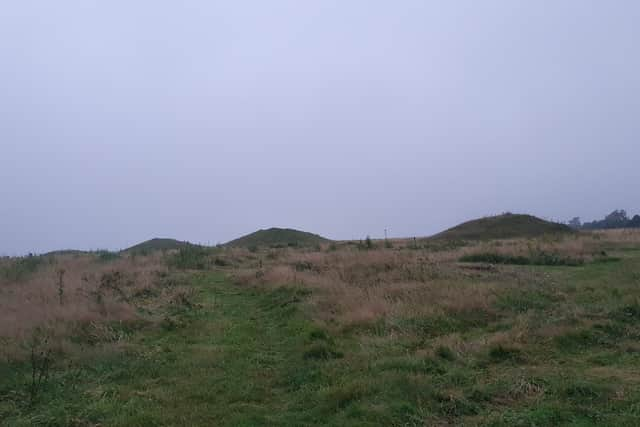
In fact, the remains of this road can still be found at Iping Common, passing past the ancient earthworks of Iron Age settlements.
Ghost Lights of Iping Common
West of Midhurst, the open heathland of Iping Common presents a very different landscape.
For generations, people have spoken of strange lights moving across the common after dark.
These kinds of stories occur throughout Britain. Sometimes they are interpreted as spirits of the dead. Elsewhere they become warnings of hidden dangers or signs of buried treasure.
In Sussex, the lights are sometimes associated with lost travellers crossing the heath or with smugglers using secret routes inland from the coast.
The reality may be far less dramatic. Atmospheric conditions, distant lanterns or simple misperception could explain many sightings.
Yet the stories endure because the landscape still possesses a sense of isolation.
Perhaps that is why, when H. G. Wells wrote The Invisible Man, he chose to set it in Iping.
Posh Petworth Phantom
Like all great houses, Petworth is said to have its own ghost: a White Lady who has reportedly been seen gliding through corridors and state rooms.
Staff and visitors have described hearing footsteps echoing through empty galleries, sensing someone standing just behind them, or catching sight of a figure disappearing around a corner, only to find no one there.
Hardly surprising, though, in a house with long corridors and steeped in centuries of family drama, servants' stories and political intrigue.
Souling on All Souls
Throughout medieval England, including rural Sussex, people marked All Souls' Day through the ancient custom of ‘souling.’
Villagers went from door to door asking for soul cakes in exchange for prayers for departed relatives. The dead were not viewed as frightening strangers but as members of the community who remained connected to the living through memory, ritual and prayer.
So, when children take part in the Midhurst Town Council’s daytime trick-or-treat trail, they are not just after a sugar hit, but carrying on an ancient autumn custom.
Viewed individually, many of these stories are impossible to prove. Some almost certainly originated in the Victorian fascination with ghosts and medieval ruins. Others may preserve fragments of much older traditions.
What makes this region unusual is the concentration of such tales within a relatively small area.
From the cursed ruins of Cowdray to the singing church beneath Didling Hill, these stories reveal as much about the landscape and the people who lived within it as they do about the supernatural.
They remind us that long before electric streetlights and mobile phones, the Downs could be lonely places after sunset, and every distant light, unexplained sound or figure in the mist carried the possibility of a story.
And in Sussex, stories have a habit of lingering.