
Sowing the seeds of future careers in horticulture in West Sussex
See the latest news from Your World at https://www.sussexexpress.co.uk/your-world
The employment challenge facing horticulture is considerable.

Growers are grappling with labour shortages, an ageing workforce and increasing competition from other industries for talented young people who are often unaware of the many diverse opportunities the sector offers.
It’s a challenge that West Sussex Growers’ Association (WSGA) is tackling head on with a series of initiatives, including engaging with secondary school students at an early stage.
Richard Hopkins, who is chair of the WSGA, a specialist horticultural branch of the NFU, envisaged a programme of sustained engagement with students, beginning in Year 7 and building with successive interactions through Years 8 and 9, to inform and inspire their thinking before making their important academic subject choices.
The aim is to show young people that modern horticulture needs far more than growers and harvest workers.
Engineers, food scientists, IT specialists, accountants, data analysts, agronomists, HR professionals and commercial managers all play vital roles in the sector's success.
Rachael Williams started working for WSGA in 2022 and was asked to implement Richard’s vision as part of her brief.

What began as an ambitious idea has evolved into a comprehensive education programme connecting schools with commercial horticulture and creating new opportunities for young people.
Rachael established a steering group of growers, HR specialists, school careers leaders and members of the West Sussex Careers Hub to help shape the education engagement project. The group’s input has been critical to the initiative’s success.
They identified 12 secondary schools based around the horticultural hub in Chichester and agreed that speaking to whole year group assemblies would be the best way to engage with as many students as possible.
Honest feedback was given, and taken on board, as to how to make the information appealing to students. Assemblies were trialled and refined in 2022, with delivery starting properly in the 2022/2023 academic year.
The theme for Year 7 students is ‘What is horticulture?’ Children where are asked to identify sweet bell peppers and sweetcorn and they learned interesting facts about the businesses that produce them.
Tangmere Airfield Nurseries grows 70 million peppers a year in glasshouses that cover the equivalent of 60 football pitches. Barfoots processes almost one million cobs of sweetcorn a day in the summer peak and through anaerobic digestion, produces enough electricity from waste material to run one of its factories.
Just as importantly, pupils meet young people already working within the industry, hearing first-hand accounts of their career journeys and having the chance to question them.
The themes develop as students progress through school, covering some of the many different career options in Year 8, and discussing how to access varied career paths in Year 9.
Rachael said: “We don’t want the assemblies to be a once-a-year experience for the students. We offer a lot of other opportunities for schools and students that genuinely want to engage.”
These include horticulture-themed lessons in subjects such as maths, science and geography, small group sessions covering apprenticeship options, and work experience opportunities. WSGA has had more than 15,000 student engagement encounters in just over three years.
And WSGA is going even further. In 2024, it joined forces with Management Development Services (MDS) to pilot an apprenticeship scheme offering four placements of six months each in four different horticultural businesses, while working towards a Level 3 supply chain qualification.
MDS has been delivering a management training and development programme to graduates in the food industry for 40 years.
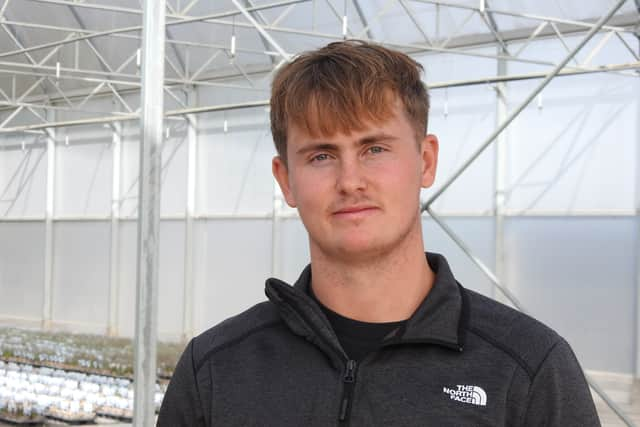
Aaron Copeland - first Regis School student to complete the scheme
Aaron Copeland is the first student to complete the scheme. Although academically capable, the Regis School pupil didn’t want to go to university but was interested in opportunities in engineering or finance. WSGA arranged work experience for him at Vitacress Herbs and Newey, spending half a day at each in both departments.
Rachael said: “Aaron liked what he saw, but, understandably for an 18-year-old, was reticent about committing to an apprenticeship in a single discipline as he didn’t know enough about what he wanted to do, so we had an idea, a flexible multi-placement apprenticeship scheme that allows trainees to do four different jobs in four different WSGA businesses to learn about the industry.”
After successfully completing a challenging selection day, Aaron started at Tangmere Peppers in October 2024, working across its glasshouse and packhouse operations.
He then moved to Wicks Farm, where he spent time with the blackberry team, including helping to manage the pickers.
A third placement at Barfoots saw him take on engineering administration and project management responsibilities before finishing at ornamental grower Fleurie Nursery, working as a line leader in dispatch.
Reflecting on the experience, he said the programme exposed him to careers and opportunities he would never otherwise have encountered.
"It's been really good and I have learned so much over the past two years," he said.
"I've met so many different people and worked in lots of different areas. I've picked up so much to take away."
Now considering his next career move, Aaron believes the programme has given him the confidence and skills to pursue a successful career within the industry.
Over the past two years he has spoken to the Low Pay Commission, met MPs, supported WSGA’s work in schools and is about to speak to WSGA’s executive committee about his experiences.
“I’m very happy with the choice I made. The networking has been really useful and I must grab the opportunity by the scruff of the neck. I’m in a good position and need to make the most of it,” he said.
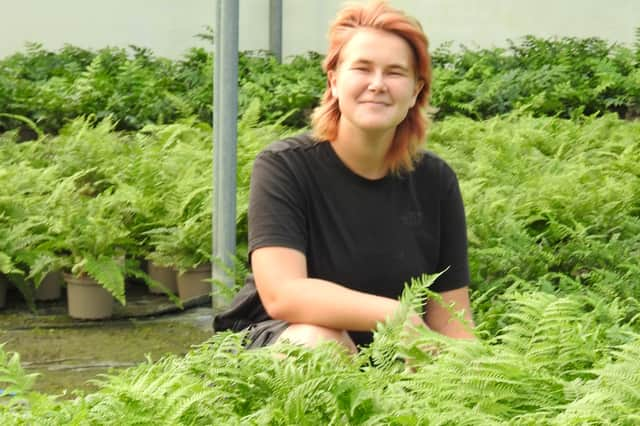
Maxie Wheeler - cultural grower at Fleurie Nursery
Another former pupil at the Regis School, Maxie Wheeler, followed a different but equally successful route into horticulture at Fleurie Nursery. After work experience in Year 11 at the nursery, she continued working there while studying for a Level 2 in horticulture at Brinsbury and a Level 3 in horticulture at Merrist Wood colleges.
She has now started a full-time position as a cultural grower, helping to oversee Fleurie’s extensive range of ornamental plants.
“I prefer working outside to being in an office so was looking for that sort of role. I didn’t know much about the sector initially, but I spoke to Rachael and our careers adviser to find out more about what was involved,” she said.
“I’m enjoying working here and I’ve already learnt a lot in just two months, while getting used to full-time work.”
Like Aaron, she is keen to promote horticulture to her generation, including attending a careers event with WSGA and returning to The Regis to talk about her experiences.
“It’s a great industry and not many people know about all the different opportunities there are,” she said.
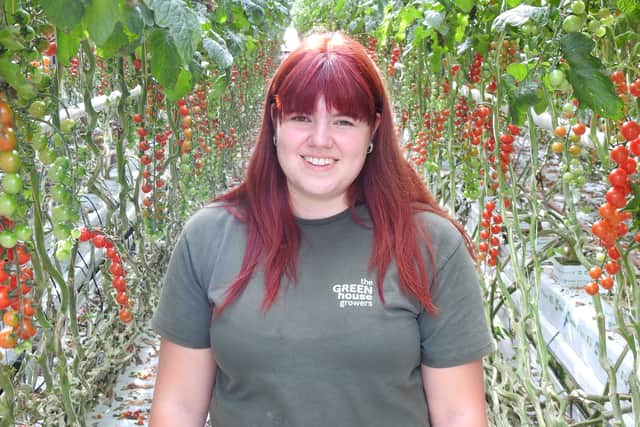
Emily Harwood - trainee assistant grower position at specialist tomato grower The Greenhouse Sussex.
Emily Harwood's journey followed a similar pattern.
Beginning with work experience at Ormiston Six Villages Academy, she studied horticulture at college, continuing this work during term-time and holidays, before securing a trainee assistant grower position at specialist tomato grower The Greenhouse Sussex.
Her responsibilities include monitoring crops, analysing growing conditions, completing spray records and contributing to yield forecasting.
"I'm really pleased that my work experience has led to this role," she said.
Rachael believes that WSGA is now pushing at an open door, as both schools and employers increasingly recognise the value of apprenticeships as an alternative to university.
“The work we’re doing is helping to show that there are other options,” she said.
That work, and Aaron’s success, has led MDS to expand its non-graduate training offer. Its Fresh Futures Programme is available to students in West Sussex and Lincolnshire, offering each student three paid eight-month placements in two years, while studying for a Level 3 qualification.
The aim is to offer young people a structured route into horticulture without following the traditional university pathway. MDS says that, within four years, someone completing the course could be at the same Level as a graduate who had taken the grad programme, but without the financial burden.
Chief Executive Officer Sapphira Watson said: “We had to change the mindset of our members - the view that, if you haven’t got an industry background or gone to university, then you’re not as good.
“Those mindsets are being changed, because businesses recognise that, if we don’t do things differently, we’re not going to get the people coming in to do the jobs that we need.”
MDS is using activities including careers events, school visits and webinars to raise awareness.
Michelle Heagren of MDS said: “It’s about telling the story – showing that the food industry is more than just farming. It’s the technology, the engineering, the marketing.”