
New video call project set to transform cardiac arrest care at SECAmb
South East Coast Ambulance Service (SECAmb) is launching a new initiative that utilises video technology to enhance the care provided to patients experiencing a cardiac arrest.
The project supports the Trust's commitment to using innovation and technology to improve patient outcomes and aligns with wider NHS ambitions to embrace digital solutions to deliver faster, safer and more effective care.
Launching on Monday, October 26, the initial four-week pilot will enable specialist critical care paramedics (CCPs) to send a secure video link to callers during a suspected cardiac arrest, allowing clinicians to gain a real-time view of the scene while the emergency is unfolding.
By seeing what is happening first-hand, CCPs will be able to provide enhanced clinical support to callers and those delivering CPR on scene, helping to optimise the vital care provided before ambulance crews arrive. The live visual information will also allow clinicians to build a clearer picture of the situation and share valuable information with responding crews before they reach the scene.
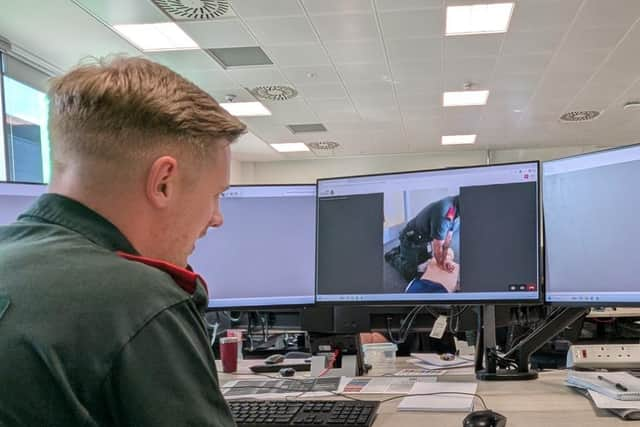

The new capability builds on the life-saving support already provided by emergency medical advisors (EMAs) in SECAmb’s emergency operations centres (EOC), who guide callers through CPR and provide reassurance during some of the most critical moments a patient and their loved ones may face.
For incidents where more than one bystander is present, the addition of video technology will provide an extra layer of specialist clinical support, helping clinicians assess the situation more effectively and optimise the care being delivered until ambulance crews arrive.
To protect privacy, participation is entirely voluntary and any video call is conducted through a secure link that is not recorded.
Shared care records clinical manager, Michael Whitcombe, said: “This trial builds on the excellent partnership between our virtual care and critical care teams, bringing together specialist clinical expertise and innovative technology with a shared ambition to improve outcomes for patients experiencing cardiac arrest.
“As we continue to develop our digital capabilities across the Trust, this project represents another important step towards delivering more connected, informed and joined-up patient care. It demonstrates how we can use technology to bridge gaps between clinical teams, improve the flow of information and support better decision-making at critical points in a patient's care journey.”
At SECAmb, the initiative forms part of the Trust’s ambition to build on its leading cardiac arrest survival rate. Latest figures for May 2026, published by NHS England, show the Trust achieved its highest-ever monthly 30-day cardiac arrest survival rate of 17.2 per cent. This surpasses SECAmb’s previous highest percentage of 15.9 in June and August 2023 and places SECAmb top nationally and well above the average of 10.2 per cent for the month.
Bradley Gander, critical care team leader, said: “Every second counts when someone experiences a cardiac arrest. This technology gives us the ability to better understand what's happening on scene and provide enhanced support at the earliest possible stage.
“Being able to see the environment, assess CPR and identify any additional challenges means we can support callers more effectively and give responding crews valuable information before they arrive. Ultimately, it's about giving patients the best possible chance of survival.”
Penny Green, head of operations for call handling, added: “This is an exciting example of how innovation and collaboration can improve patient care. By bringing together expertise from critical care, critical systems and EOC, we're integrating technology to strengthen our response to cardiac arrests and support both our patients and staff.
“This technology does not replace the outstanding work already carried out by our call handlers. Instead, it provides an additional tool and another layer of specialist clinical support, helping us further improve outcomes for patients experiencing cardiac arrest.”
The initial pilot will involve CCPs and emergency operations centre teams, with learning and feedback helping to shape future implementation across the Trust and exploring opportunities to extend the use of video technology to support a wider range of calls.