
Calls for earlier support for region’s SEN children
See the latest news from Your World at https://www.sussexexpress.co.uk/your-world
Families in Chichester and the surrounding areas should receive support for children with special educational needs and disabilities (SEND) long before they receive a formal diagnosis, experts have warned, despite a £182.7 million government funding package aimed at improving services in West Sussex


The funding announcement comes six months after West Sussex County Council unveiled its SEND Reform Plan, which promises earlier intervention, improved communication with families and better co-ordination between education, health and care services.
Yet specialists working with young children say many families are still being left in limbo, with assessments and diagnoses often taking 18 months and support frequently difficult to access until a child has entered the formal SEND system.
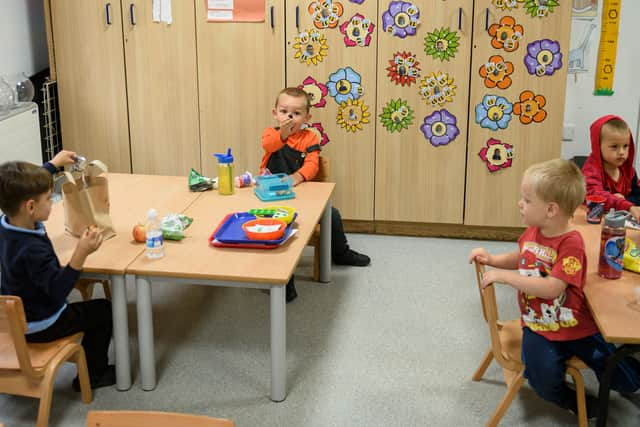
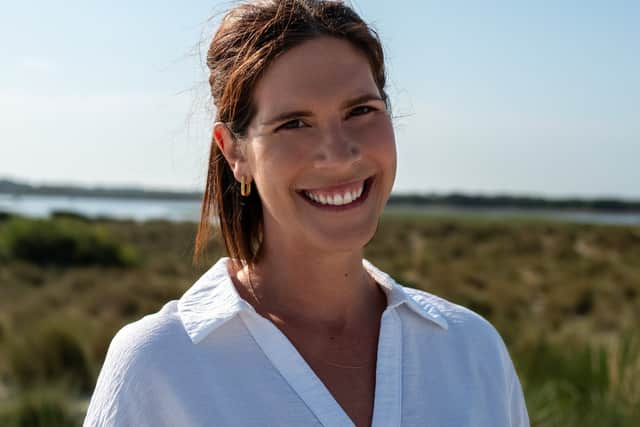
Grace Hall, a former Early Years SEND and Inclusion Lead at West Sussex County Council, believes the current model is failing many families during the crucial early years of a child's development.
Now running her own specialist support service, Peaceful Pathways, she said parents are often left waiting for answers at the very point when intervention can make the greatest difference.
"Many parents remember the moment clearly," she said. "A comment at a two-year check, a toddler not talking like their cousins, or a quiet worry that has been growing for months.
"Realising your child may need extra support brings a mix of love, fear, guilt and grief, often all at once. Almost every parent asks the same question: 'What happens now?' Too often, the answer is simply: 'You wait'.
"What parents tell me hurts most isn't the waiting itself. It's the uncertainty. They don't know who is responsible for helping their child in the meantime, or what support they have the right to ask for."
Nationally, councils are facing growing pressure over SEND provision, with rising numbers of Education, Health and Care Plans (EHCPs), increasing demand for specialist support and mounting financial pressures. Like many local authorities, West Sussex has warned that the cost of delivering SEND services continues to outstrip available funding.
For families of younger children, the challenges can be particularly acute.
One father from a village north of Chichester said his son's nursery raised concerns about his child when he was three years old.
"Our son's nursery key worker said he had a speech delay and might be autistic," he said. "We were referred to an NHS speech and language therapist, but it took another three years before he was seen. By that point, he was already at school.
"His reception teacher said, 'He's definitely autistic, but not enough to have help.'
"The GP told us to wait until he was older for a diagnosis, and the school wouldn't move an inch to recognise the needs of a little four-year-old who wasn't disruptive but couldn't cope in a chaotic classroom of 32 children.
"We felt completely alone. I thought I was doing something wrong as a parent. I didn't understand the meltdowns or why he became so distressed at parties and events that other children seemed to enjoy. I felt like a total failure."
Ms Hall argues the system remains too focused on diagnosis rather than need.
“It follows a route from diagnosis, through to ECHP and finally support. It takes a long time to get there.
“Meanwhile, nurseries and early years practitioners need training and upskilling to help support families, but it is hard with a high turnover of staff.
“Teacher training doesn’t focus on SEND, they aren’t taught how to manage and teach children with additional needs.”
Ms Hall believes greater investment is needed in early years provision, alongside a change in culture across the sector.
"Every setting should have dedicated SEND expertise or, at the very least, know where to signpost families for help," she said. “It’s also true to say that if a setting is working well for SEND kids, it is working well for everyone.”
"But some nurseries are turning children away because they feel unable to meet their needs. Others are spending money on one-to-one support workers, ‘velco-Veras’ who follow children around with little specialist training. In many cases, that funding would be better spent upskilling staff across the setting."
Ms Hall said support should be based on a child's needs from the outset, rather than waiting for a diagnosis or formal label.
"Early years settings need to meet children where they are developmentally and respond accordingly," she said.
"Families often find themselves navigating a maze of referrals, forms and acronyms across health, education and social care services. Many parents don't realise they can request an Education, Health and Care Needs Assessment themselves, or that Family Hubs can provide support and advice."
Key to this, though, is funding, and despite the cash injection from central government, Councillor Sam Raby, Cabinet Member for Children, Young People and Learning, has voiced his concern about the remaining shortfall:
“The money we receive from national government is not enough to cover the cost of delivering support for those with SEND in West Sussex.
“The increasing debt forecast for delivering those services both here in West Sussex and elsewhere across the country is simply not sustainable.
“I shall continue to lobby the Department for Education to highlight the challenges faced here in West Sussex, and push for the funding we need to ensure all of our children and young people can continue to thrive.”
Chichester families who face months, and sometimes years, of uncertainty just want to know that help is there, and easily accessible, when they need it.