
Grandparents’ Wordle complaint inspires Crawley graduate’s free UK geography game
A complaint about American English in Wordle has inspired a Crawley graduate to make a different kind of daily puzzle, based on the places, landscapes and history of the UK.
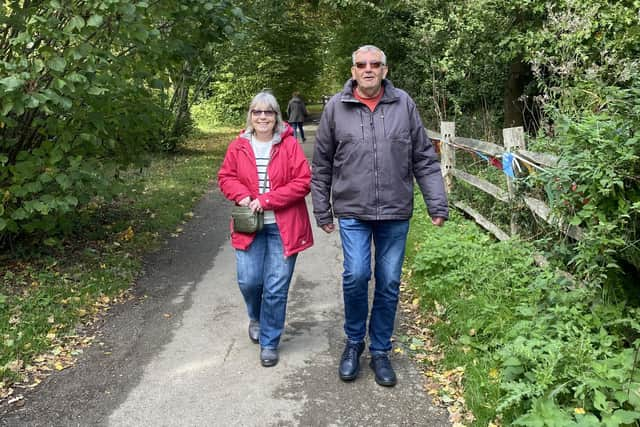
Ben Shackell, who studied physics at the University of Surrey, came up with Four to Find after his grandparents said they wanted something that felt a little closer to home.
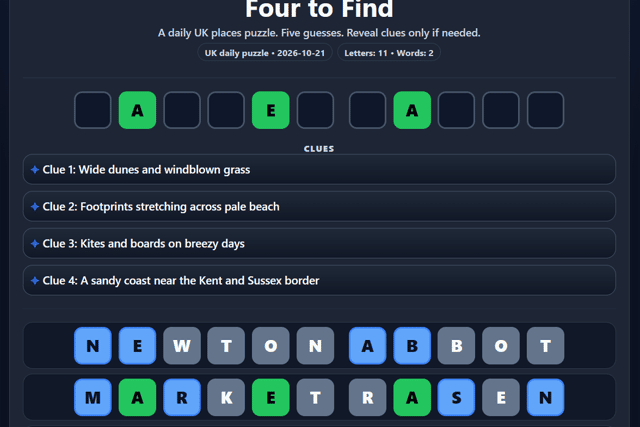

He started building the game so they could enjoy it together.
Ben, who is also the founder of LabFlow Scout Ltd, a separate early stage business developing technology to reduce energy waste in laboratories, said: “Four to Find started because my grandparents were complaining that Wordle used too many American words.
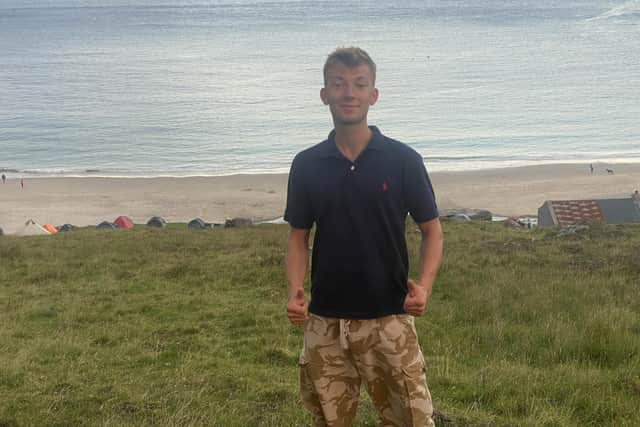
“I thought it would be funny to make them something based on British places instead.
“It began as a little family project, but I soon realised it could be something other people might enjoy too.
“My grandparents were really the inspiration behind it. I liked the idea of having something we could all play each day, even when we weren't together.
“It's also quite nice when a clue reminds someone of a holiday they've been on, or introduces them to somewhere they've never heard of.”
Instead of guessing a word, players have four clues to identify a mystery location somewhere in the UK.
The first clue leaves plenty of possibilities open. The later ones reveal more about its landscape, history or landmarks, so players can take a chance early or wait until the answer becomes clearer.
Some puzzles could evoke familiar places in Sussex, from the South Downs to the coast. Others take players much further afield, perhaps to a Scottish island, a harbour town or a former industrial city.
Each answer comes with a short fact about the place, giving people something new to discover even if they do not guess correctly.
Ben continued: “The game is fairly simple. Every day there's a different mystery location somewhere in the UK, and you have four clues to work out where it is. The earlier you guess correctly, the better you've done.
“I wanted it to be something people could enjoy for a few minutes each day and perhaps learn something along the way.”
What began as a game for his grandparents has become a way to spark conversations about places people have visited, recognise somewhere from a family holiday or learn about a part of the country they have never seen.
There is a new location each day, along with streaks, a leaderboard and a stamp book for players who enjoy keeping track of the places they have found.
The game is free, works in a web browser and needs no download.
Ben added: “It's been lovely seeing people outside my family take an interest in something I made.
“Having the Geographical Association publish an article about it was especially exciting, and I'd really like to see how far the game can go.”
The Geographical Association published an article by Ben explaining how Four to Find began and how short geography puzzles can encourage curiosity about the UK.
He hopes other families, friends and teachers will find it just as enjoyable.
Ben said: “I think it could work really well in schools. A teacher could put the first clue up on the board and get the class discussing where they think it might be. As more clues appear, pupils can change their guesses and explain their reasoning.
“It could be a fun way to start a geography lesson without making it feel like a test.”
You can try the game for free at https://logicisle.com/four-to-find/.